
Wait and Miss Out: Fewer New Homes Are Coming to the East in 2026.
- Stanley Lim
- 8 min read
- Blog
- 27 Nov 2025
If popular demand is anything to go by, the East is a location of choice for Singapore homebuyers. In recent years, regional towns – like Bedok, Pasir Ris and Tampines – have seen both public and private residential projects drawing widespread interest.
Just earlier in February, this enduring appeal was on full display with the launch of Parktown Residence. Its impressive 87% take-up rate (1,041 of 1,193 units sold) demonstrated strong demand, not just for integrated developments, but also for the growing Tampines North precinct – which sits close to major employment nodes in the East, such as Changi Business Park, Changi Airport and Tampines regional centre.
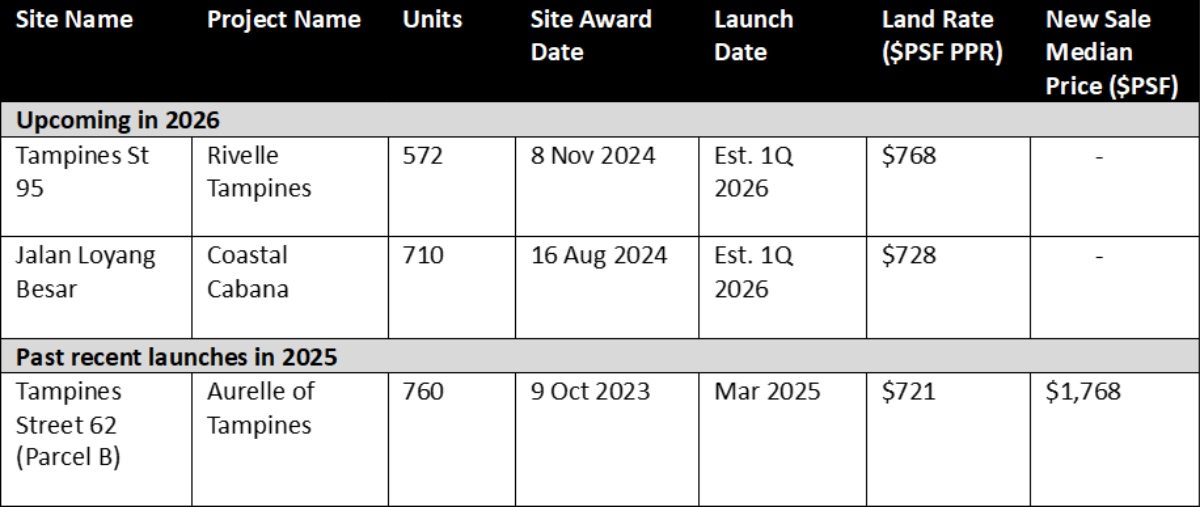
Similarly, this strong buying momentum was reflected in the Executive Condominium (EC) segment during Aurelle of Tampines’ launch in March. The 760-unit project by Sim Lian Group achieved a 90% take-up rate, selling 682 homes to eligible first-time buyers over its debut weekend.
Looking ahead to 2026, demand for new mass-market homes in the East is expected to stay firm, though the tapering supply of private and EC projects may limit opportunities for prospective buyers down the road. Therefore, for anyone keen on putting down roots in the East, the decision to act sooner rather than later means the difference between securing a dream home and missing out.
Table 1a: Private residential sites and projects in the East
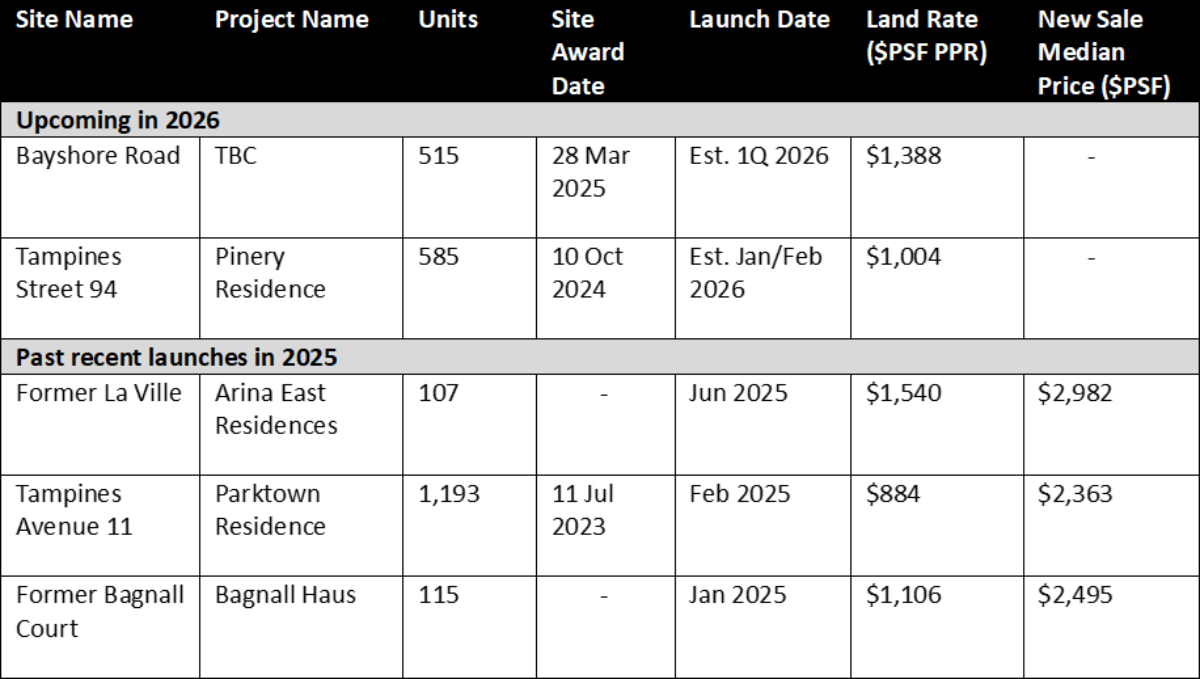
Table 1b: EC sites and projects in the East
Why might new condominium and EC supply slow in the East?
Based on successfully-tendered Government Land Sales (GLS) sites in 2025, the East will see only four launches next year, bringing a total of 1,100 private home and 1,320 EC units to market.
These fresh projects include Pinery Residence and Bayshore Road GLS in the private segment, alongside two EC developments, Coastal Cabana and Rivelle Tampines. But until then, new homebuying opportunities for east-side buyers are set to remain scarce, especially with stock in recent developments depleting.
Chart 1: Available and upcoming supply of private and EC homes in the East
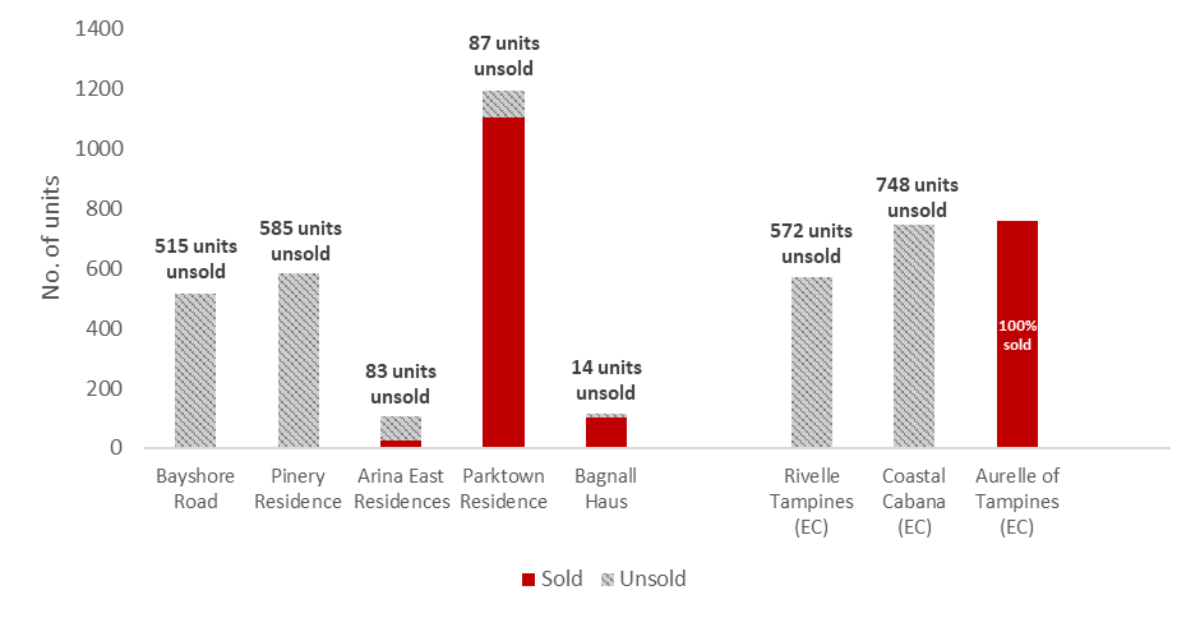
Among private residential launches for 2025, Bagnall Haus and Parktown Residence have respectively sold 87.8% and 92.7% of their units as of early-November. And while Arina East Residences still has a higher proportion of unsold stock, this translates to a modest supply of just 83 units. As such, opportunities are still available to east-side condo buyers for the rest of the year, but options might be limited.
By comparison, the EC situation in the East is far tighter, with no new stock available until the start of 2026. Aurelle of Tampines (760 units) achieved full take-up roughly a month after its launch, while earlier EC projects like Tenet and Parc Central Residence have long sold out since their respective launches in 2022 and 2021.
In the foreseeable future, these supply constraints are expected to persist, given the likelihood that any fresh inventory will be steadily absorbed across 2026. This issue is further compounded by the lack of remaining untendered EC sites in the East on the 2025 GLS Confirmed List. Hence, even with new EC sites announced in 2026, any resulting supply would only enter the market from 2027 onwards due to time needed for the tendering process.
East-side buyers should act early in 2026 – or possibly pay more.
Beyond tighter supply, another motivation for buyers targeting the East to act early next year is the likelihood of new home prices rising further. Strong fundamentals, such as robust amenities and improved transport connectivity, have helped support the growth of new private home and EC prices in the East. However, rising costs are also a contributing factor.
This is evident based on steadily growing land costs, which have risen in lockstep with prices of new EC developments in the East.
Chart 2: Median unit prices and land costs of new EC homes in the East
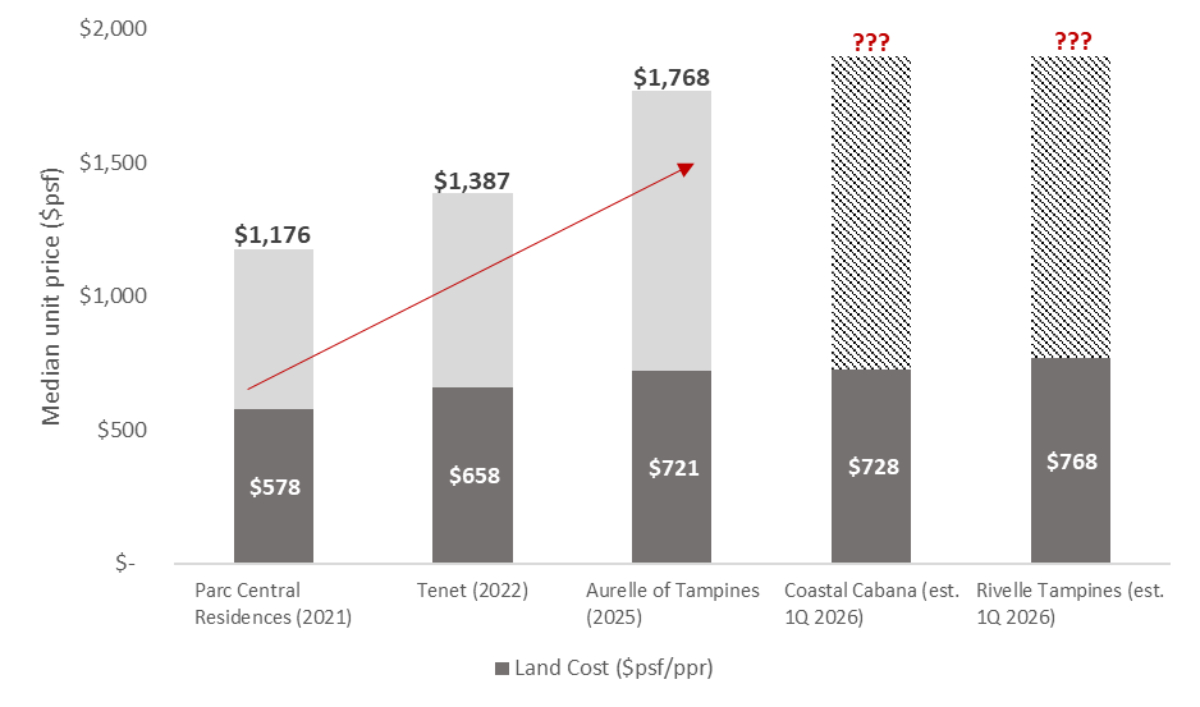
Parc Central Residences, launched in 2021, recorded a land cost of $578 psf ppr and a median unit price of $1,176 psf. In comparison, Tenet’s numbers rose to $658 psf ppr and $1,387 psf respectively, reflecting upticks of 13.8% and 17.9%. This upwards trajectory continued with Aurelle in Tampines, which saw its land cost climb to $721 psf ppr (9.6% higher than Tenet) and its median unit price reach $1,768 psf, representing a 27.5% uptick from Tenet’s.
These price upticks might continue with Coastal Cabana and Rivelle Tampines, as their higher land costs are expected to be reflected in new unit pricing. Based on this, one thing is clear: buyers who act next year have more to gain, as waiting beyond 2026 could mean paying even higher prices for future EC launches.
Chart 3: Median unit prices of new non-landed private homes in the East
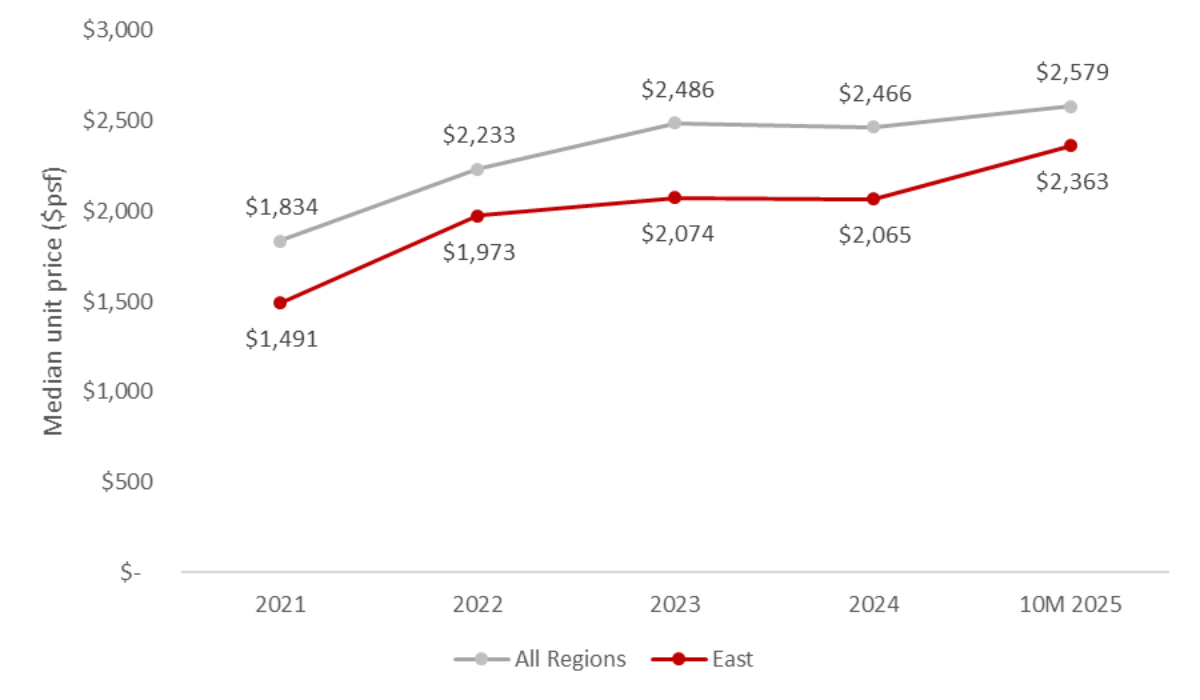
A similar trend can also be found in the private home segment in the East, where new home prices have risen in tandem with nationwide gains. Between 2021 and 10M 2025, median unit prices of new east-side homes climbed 40.6%, from $1,491 psf to $2,363 psf. This movement broadly mirrors the 58.5% increase in median unit prices of non-landed private homes across Singapore, which rose from $1,834 psf in 2021 to $2,579 psf in 10M 2025.
Hence, just like EC buyers, new private homebuyers should consider acting early, as this could allow them to stay ahead of both growing prices and possibly leaner supply in the East.
So, why should buyers choose the East for their next address?
While the East is often associated with laidback coastal vibes and its close ties to nature and heritage, it is also a region that is firmly on the path of growth.
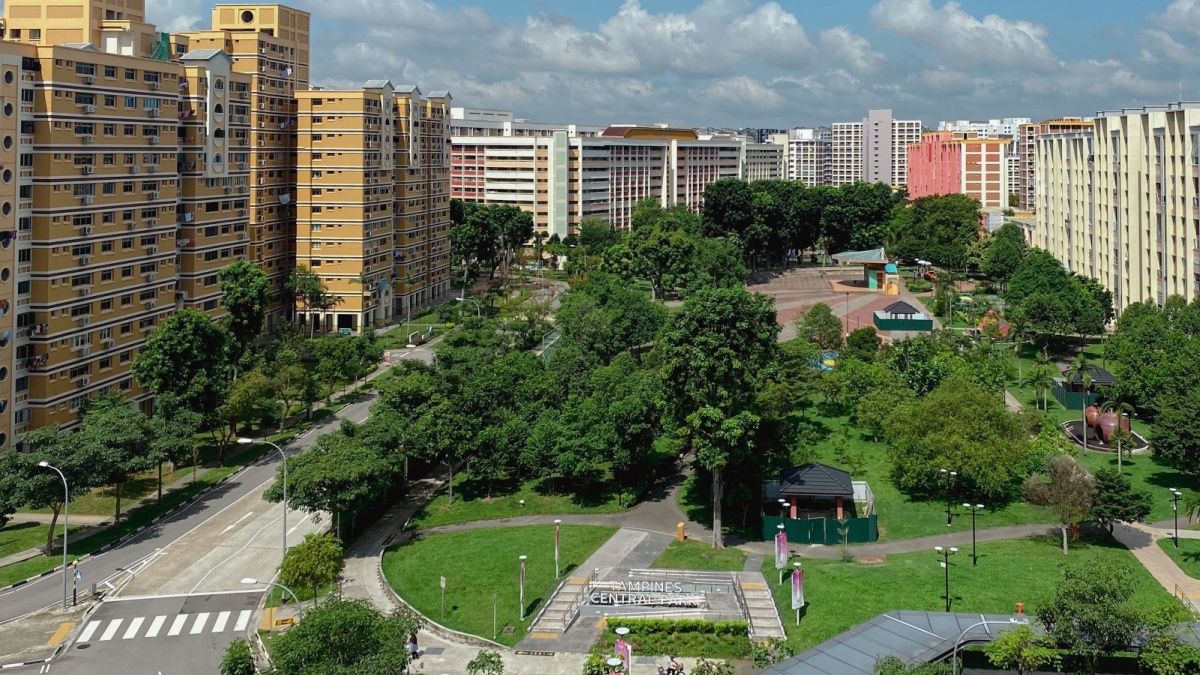
Through the years, key business hubs like Changi Airport, Changi Business Park, Paya Lebar Central, and Tampines Regional Centre have continued to expand their economic footprint. Alongside new infrastructural enhancements that have drawn in global and regional firms, this has helped to drive job creation and residential demand in the East.
To this end, the Government has rolled out various enhancements to boost regional transport connectivity and promote new live-work-play possibilities for Singaporeans living in the east.
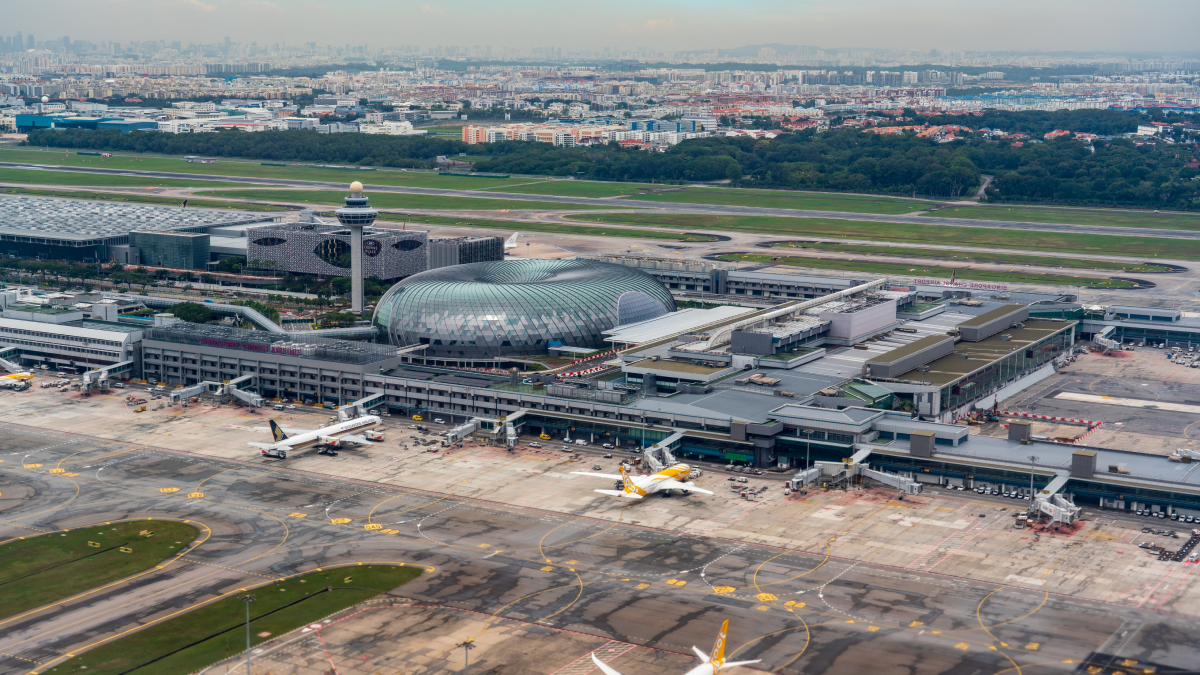
For instance, as Singapore's key aviation hub, Changi will see its latest terminal, T5, commence operations in the mid-2030s. This much-awaited expansion is expected to boost Changi Airport's passenger capacity significantly, while generating new job opportunities within the aerospace engineering and aviation services sectors.
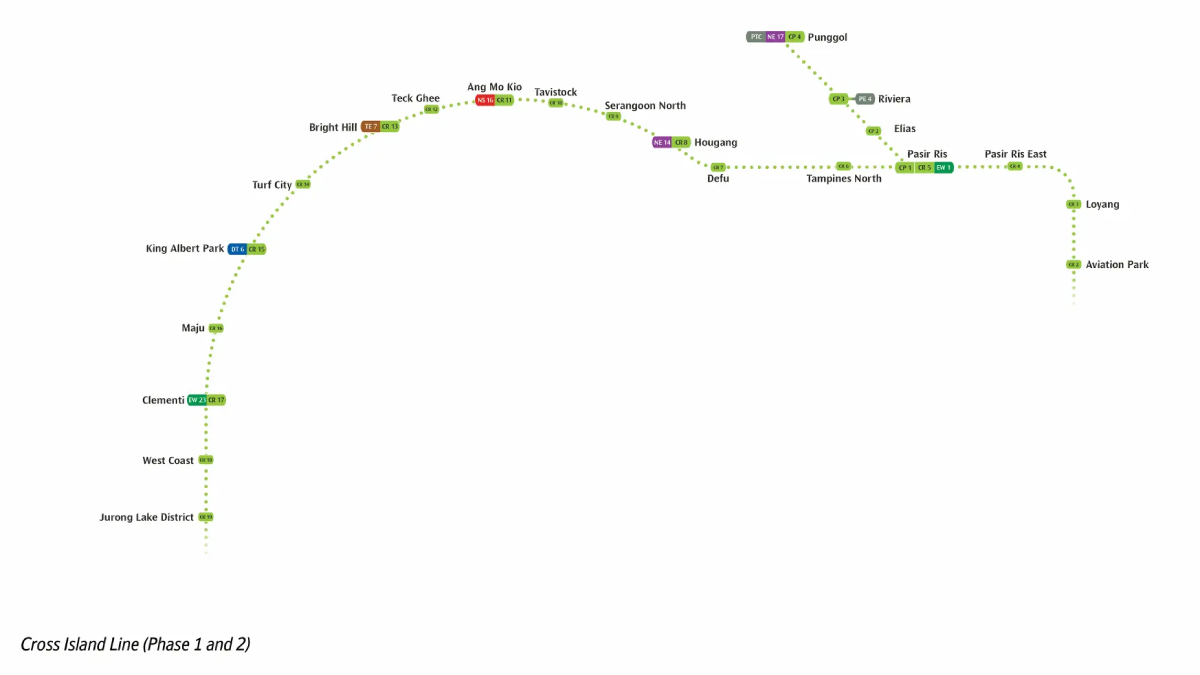
East-side residents will also benefit from enhanced transport connectivity with the new Cross Island Line (CRL), as well as and Thomson-East Coast Line extensions. By 2030, the first phase of the CRL will be completed, featuring 12 stations stretching from Bright Hill to Aviation Park. Key stops in the East, such as Tampines North and Pasir Ris, will also bring improved transport connectivity to their respective residential areas, especially with the latter being slated to become an interchange between the CRL and the East-West Line.
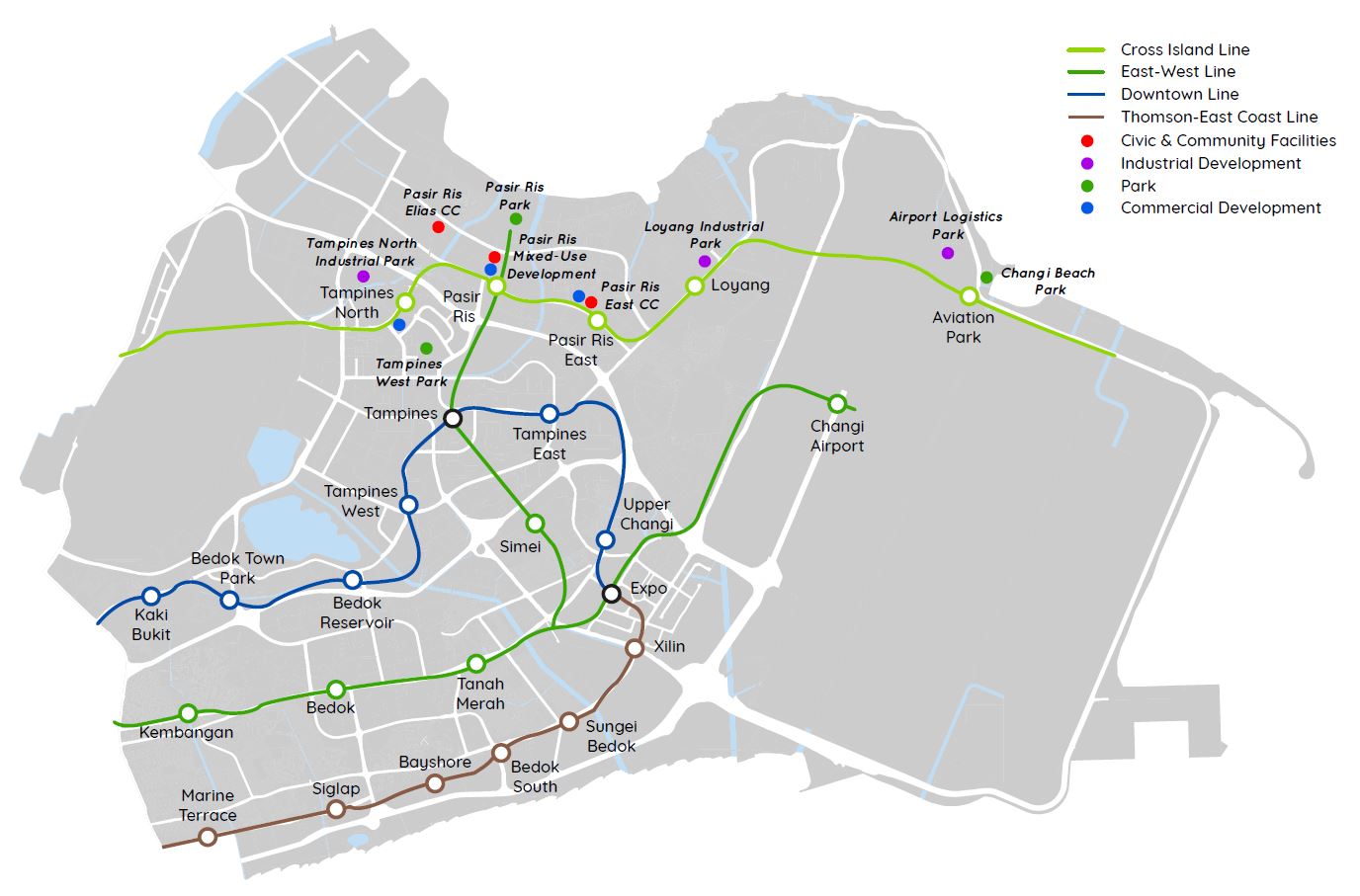
Beyond regional initiatives, efforts are underway at a town level to boost connectivity and amenities for east-siders. In particular, Tampines, as a key regional centre, has benefited from both past and ongoing projects.
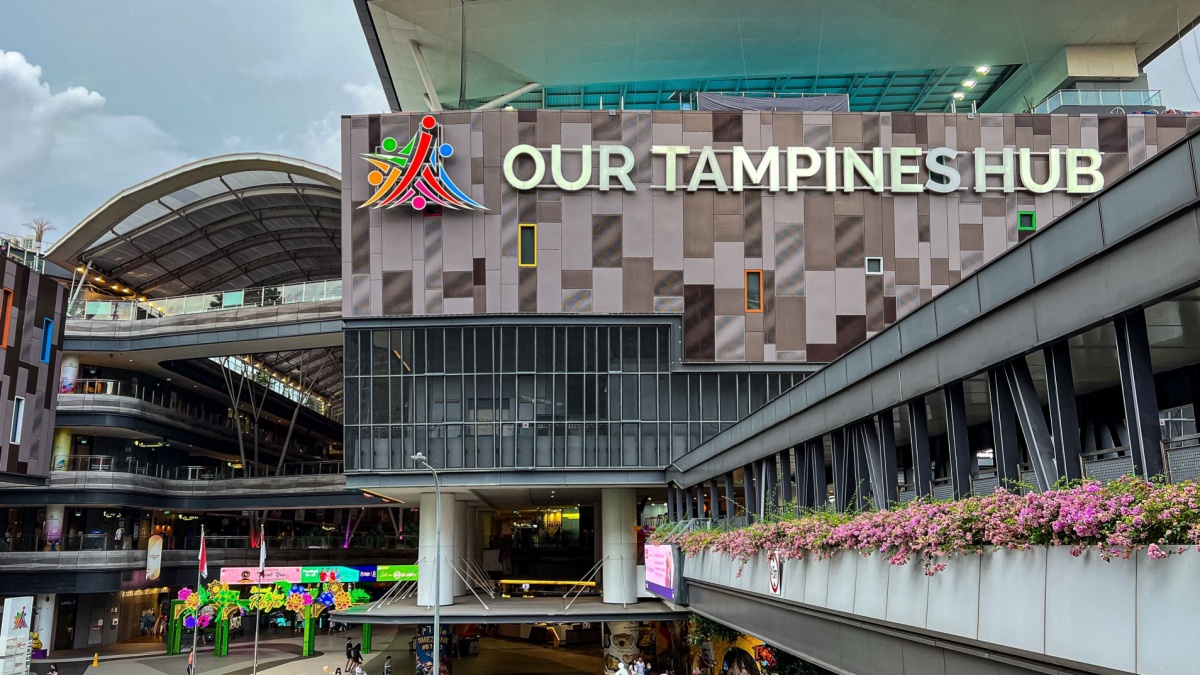
This includes the 2017 completion of Downtown Line (Stage 3), which added stops at Tampines West, Tampines East, and Tampines itself; this has helped residents gain easier access to both central and eastern parts of the island. Our Tampines Hub, which was completed in 2016, has also enhanced the town’s recreational and community offerings, by bringing a library, sports facilities, and a hawker centre under one roof.
In time, these amenities will be joined by fresh initiatives outlined within URA’s Draft Master Plan 2025 as well as the Tampines Town Council’s own five-year master plan. Under the former, the development of at least two residential and four commercial plots near Tampines Central will help to strengthen ‘live-work-play’ opportunities by bringing offices and leisure spaces closer to homes.
These developments will also complement the aforementioned five-year plan, which aims to strengthen Tampines’ status as a well-connected 20-minute town. As part of this vision, new infrastructure such as cycling bridges, dedicated bicycle paths, and covered walkways will be introduced to further enhance pedestrian links between Tampines MRT stations and nearby malls. Plans are also being studied for a new integrated transport hub, centred around the existing Tampines bus interchange and MRT station.
Together, both master plans will reinforce Tampines’ identity as a vibrant regional hub in the East, where we will also see the debut of Rivelle Tampines (EC) and Pinery Residences in 2026.
Keen to know more about upcoming EC or condo opportunities in Tampines and the East where you can live, work, and play with ease? Reach out to one of our ERA Trusted Advisers today for expert insights and all the details you need to make an informed decision!
I confirm that I have read theprivacy policy and allow my information to be shared with this agent who may contact me later.
