
How Kranji’s Turf Club Redevelopment is Paving the Way for Decentralisation in the North
- Ethan Hariyono
- 9 min read
- Blog
- 28 May 2026
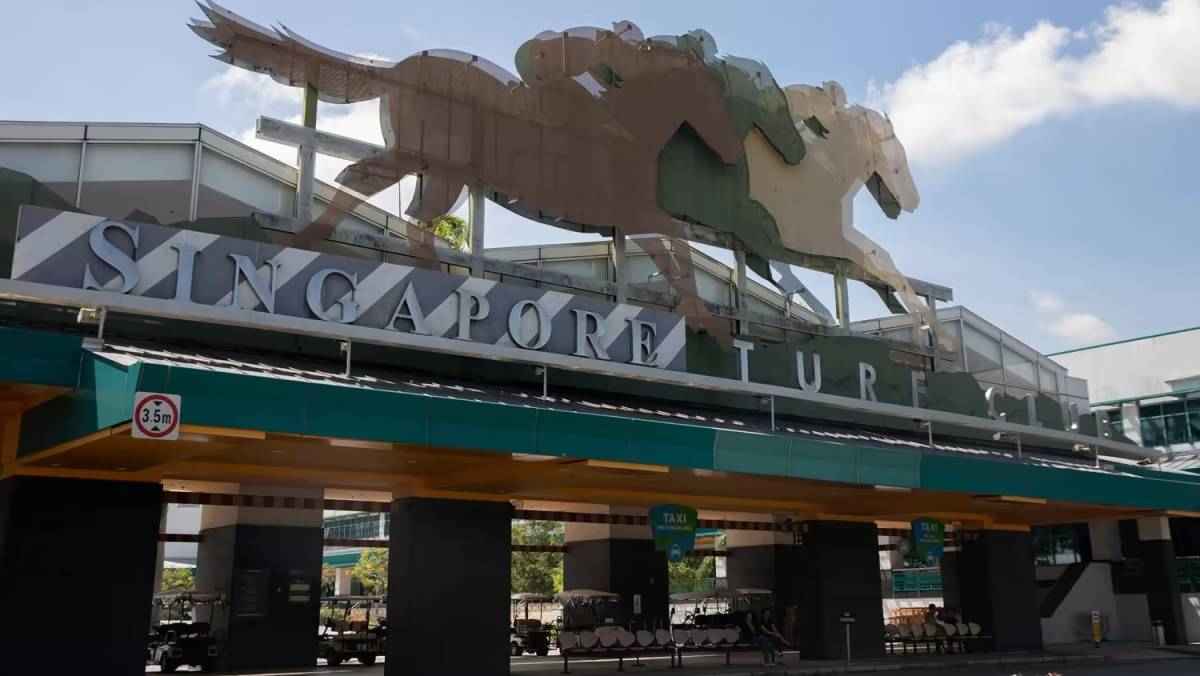
Kranji is located in the North region of Singapore. With no status as an official (residential) town, it lies between Woodlands and Choa Chu Kang and is administratively part of Woodlands planning area.
Its namesake comes from the Keranji Tree which once grew abundantly in the forested and marshy land in the 19th century. During WW2, Kranji was also used as a landing site for Japanese forces crossing through the Johor Strait, which is commemorated through the Kranji War Memorial and Cemetery today.
Kranji’s Horse Racing Heritage
In recent history, Kranji was home to Singapore’s prestigious turf club, from 1999 to 2024. The racecourse, which cost around $500 million to build was Singapore’s last horse racing track, marking the culmination of almost two centuries of racing history – one of the first instances of organised sports in Singapore.
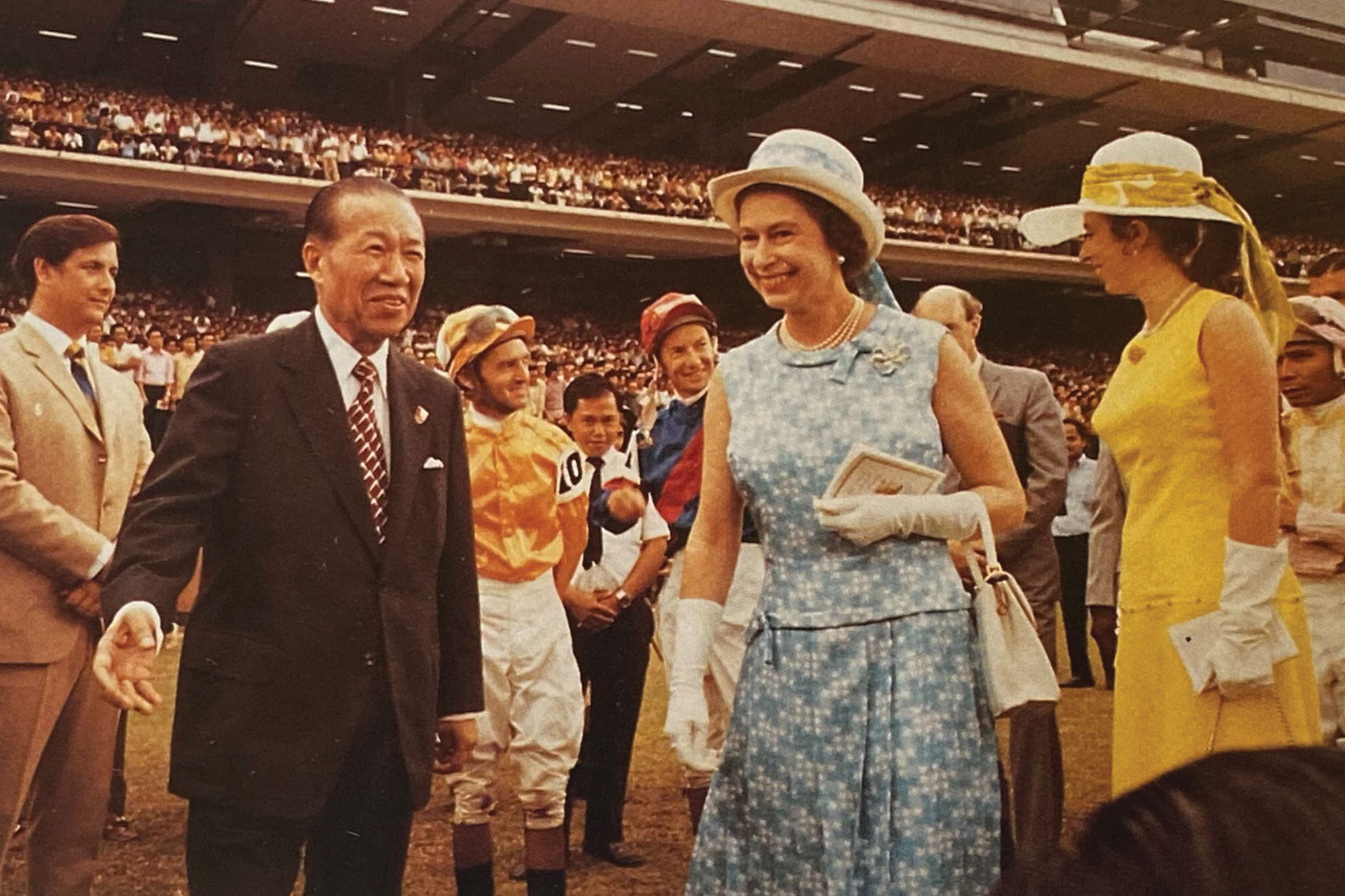
The Turf Club reflected horse racing’s rich history and prestige within the Commonwealth. In fact, the late Queen Elizabeth II of England visited the Turf Club twice: once at its former site at Bukit Timah Turf City (also coincidentally being redeveloped for residential use) in 1972, and once more at the Kranji Turf Club in 2006. The Queen Elizabeth II Cup was inaugurated in 1972 and remained one of the most prestigious events throughout the club’s history.
A New Chapter for the Lawns

At the turn of the century, Singapore’s urban trajectory became increasingly defined by the need to intensify land use and rejuvenate underutilised precincts in response to finite land constraints and evolving economic priorities. Within this context, large, low-density sites such as the Singapore Turf Club at Kranji came under renewed scrutiny. Once emblematic of a different era, the racecourse now occupies land that is strategically located yet underleveraged. Therefore, in June 2023, the government announced that the Singapore Turf Club would close by March 2027 to free up land for redevelopment and the sprawling lawns saw its last race in October 2024, symbolising the end for one of the oldest organised sports in Singapore’s history.
In its place, a new housing estate is set to emerge, spanning some 120 to 130 hectares, with the potential to yield around 14,000 homes woven into the surrounding landscape of the Kranji Nature Corridor and Rail Corridor. This transformation inscribes a new chapter upon grounds that have quietly borne witness to Singapore’s passage from colony to modern metropolis. Throughout many years of Singapore’s development, Kranji endures as a layered landscape of memory. What is it now that renders this once-remote district newly compelling from a real estate perspective?
The Trinity Leading Decentralisation in the North
The answer lies in decentralisation. Singapore’s redevelopment of areas like Kranji aligns closely with the national planning strategy of decentralisation, a long-standing policy intended to distribute jobs, housing, and amenities beyond the traditional Central Area. This approach aims to reduce congestion in the city centre, improve accessibility to employment, and create more self-sufficient regional hubs across the island.
Kranji’s Turf Club’s redevelopment reflects a broader shift in planning priorities: away from single-use recreational sites (much like what we are witnessing with golf courses around the country) and toward integrated, higher-density residential districts that can better reinforce the decentralisation of urban activity beyond the traditional city centre. The sprawling lawns of the former turf club, spanning around 130 hectares provides a key opportunity to develop a new housing estate adjacent to the emerging live-work node in Woodlands.
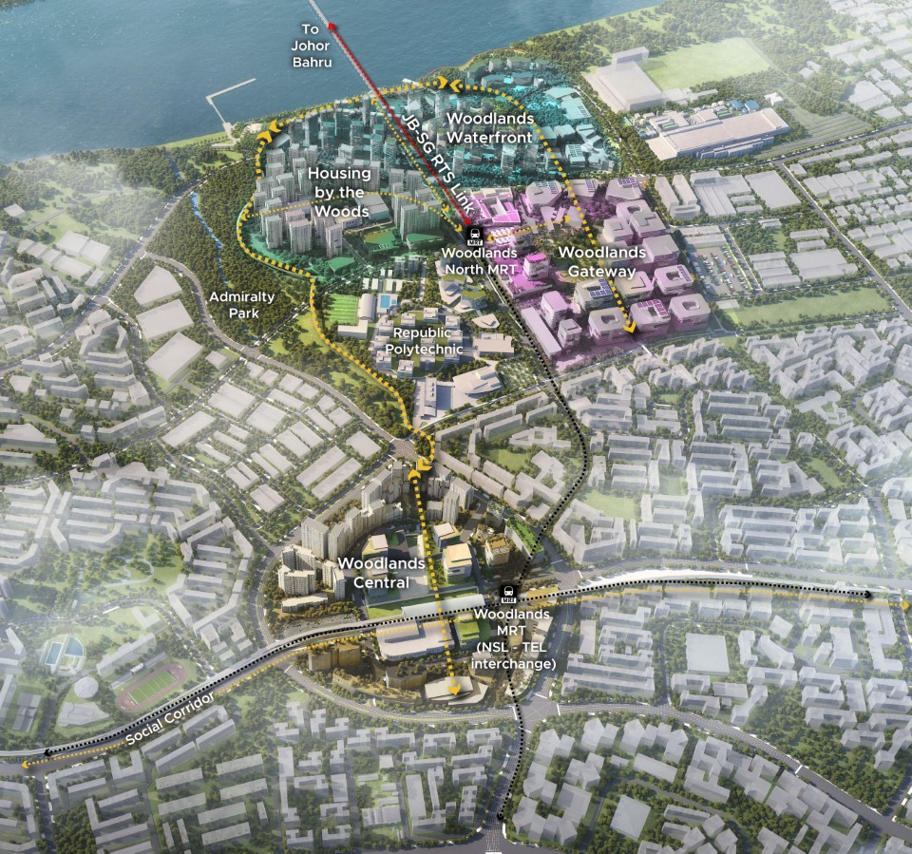
The north and north-west of Singapore are now being positioned as the next major growth corridor. This includes parts of Kranji, as well as the Woodlands Regional Centre. Planned as the largest economic hub in northern Singapore, the regional centre should generate around 100,000 jobs when fully developed.
Another major component of the northern decentralisation strategy is the Sungei Kadut Eco-District, located just south of Kranji. JTC plans to transform the area into a modern industrial district focused on advanced manufacturing, environmental technology, and agri-tech industries.
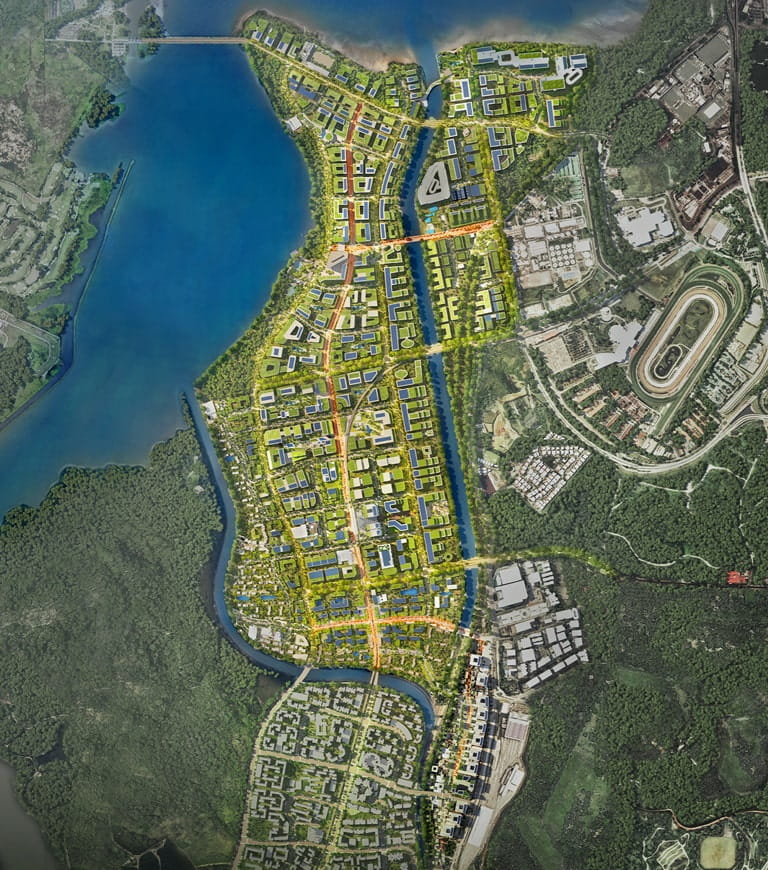
The new eco-district will also include new commercial amenities, public spaces, improved transport links, consistent with the decentralisation objective of reducing long commuting distances.
Furthermore, there is the prospect of the future Johor-Singapore Special Economic Zone as well as the future Woodlands – Johor Bahru RTS Link, where cross-border economic cooperation initiatives could further strengthen the strategic importance of northern Singapore.
Strategic rationale for developing the Turf Club
Kranji sits strategically in the middle of all of the decentralisation and development initiatives taking place in the North-West. Historically, Kranji has functioned mainly as rural farmland and recreational space, with limited plans being drafted for housing planning.
However, due to the location of Kranji and the Singapore Turf Club sitting strategically in the middle of all the decentralisation and development initiatives, the area has been earmarked as the next big housing district in the North-West.
The closure of the Singapore Turf Club reflects a broader policy of optimising land use in a land-scarce city. The 120-to-130-hectare site is large and located near existing MRT infrastructure, putting it in a prime position to expand housing supply and strengthen the northern growth corridor.
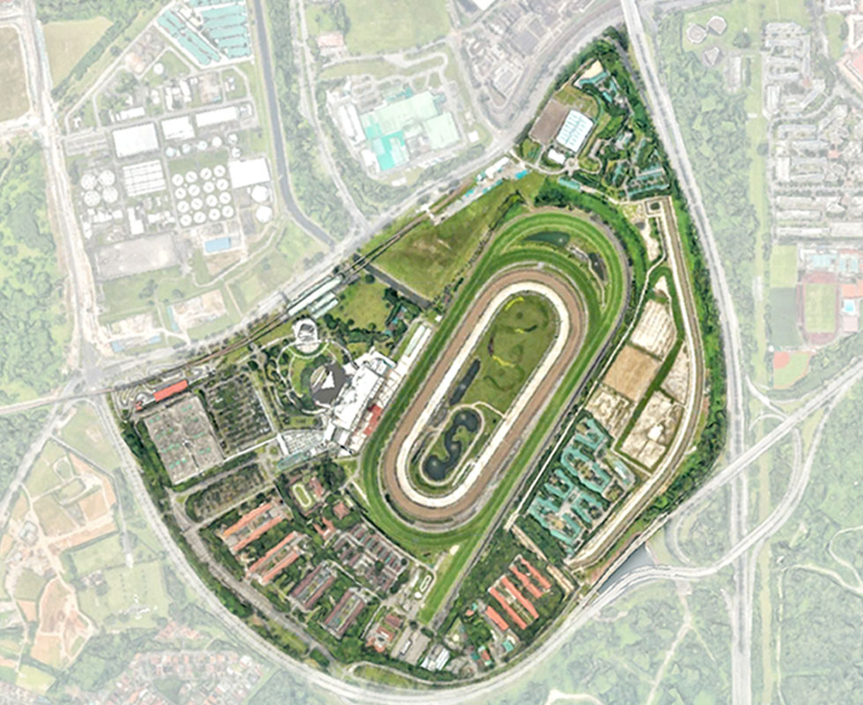
Government planning indicates the site could yield around 14,000 homes, forming a new residential district. This new housing district near Kranji MRT functions to supports population growth close to Woodlands’ commercial nodes.
This plays into Singapore’s recent urban development strategy of live-work ecosystems, which aims to develop housing estates that seamlessly connect with commercial nodes and are supported by neighbourhood amenities, retail, and transport services.
Transport and Infrastructure advancements
One of the downsides that had traditionally deterred homebuyers away from the North region has always been its connectivity. The region is far from the city centre, with commute times via the North-South MRT line exceeding 30-45 minutes. Those who commute via driving also commonly experience congestion when using the Central Expressway (CTE) to travel to the Centr. However, to support the development and decentralisation of the North, including the development of Kranji’s Turf Club housing estate, the government has a few infrastructure upgrades planned.
Downtown Line (DTL2) extension
Firstly, there will be a future Downtown Line extension that will create a new interchange station between Yee Tee and Kranji.
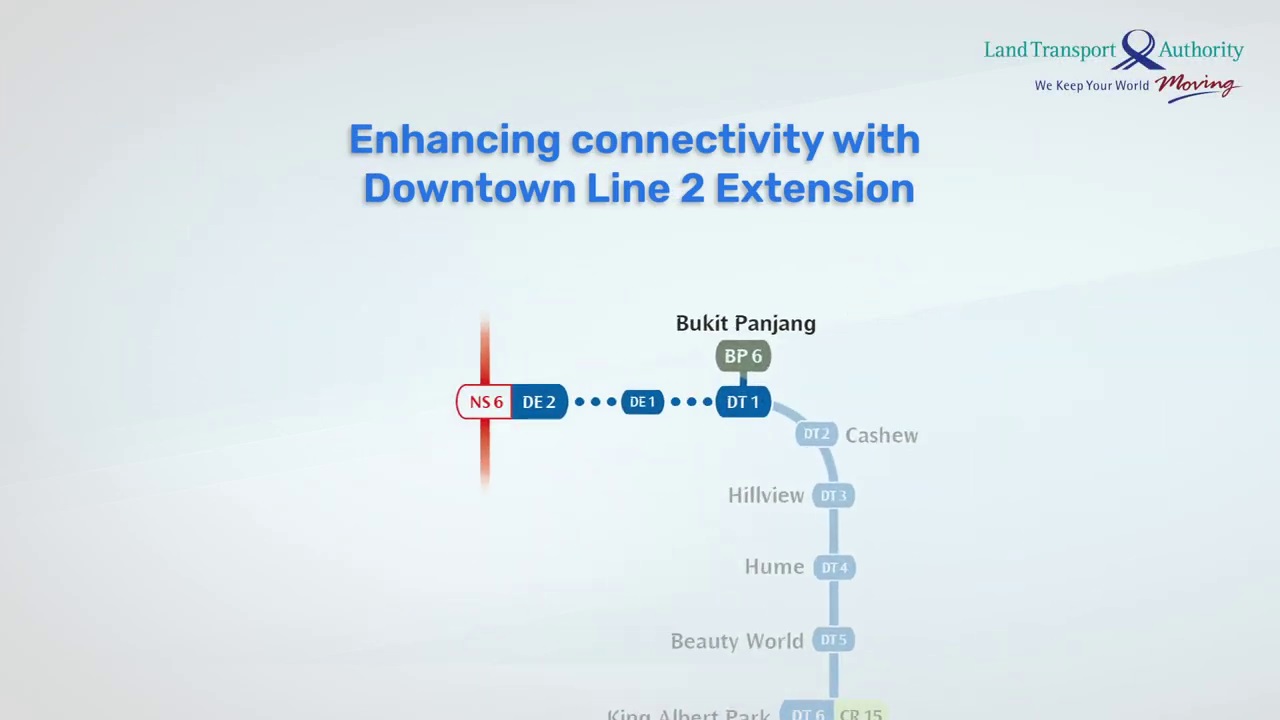
This interchange station introduces a crucial alternative to the North-South line, relieving congestion by providing a parallel route to the sole transit line serving the North region for over three decades. The Downtown line extension also provides a faster and more direct route to areas such as the CBD and Bugis, which might have previously required a transfer, while directly connecting the Northwestern housing estates (including Kranji) with the Sungei Kadut Eco-District.
The DTL2 extension also provides an alternative East-West route, connecting to stations like Geylang, Ubi, and Tampines.
North South Corridor
Kranji and the future Turf Club housing estate will also be major beneficiaries of the upcoming North South Corridor. The 21.5km integrated transport corridor will contain an expressway, dedicated bus lanes, and pedestrian/cycling routes.
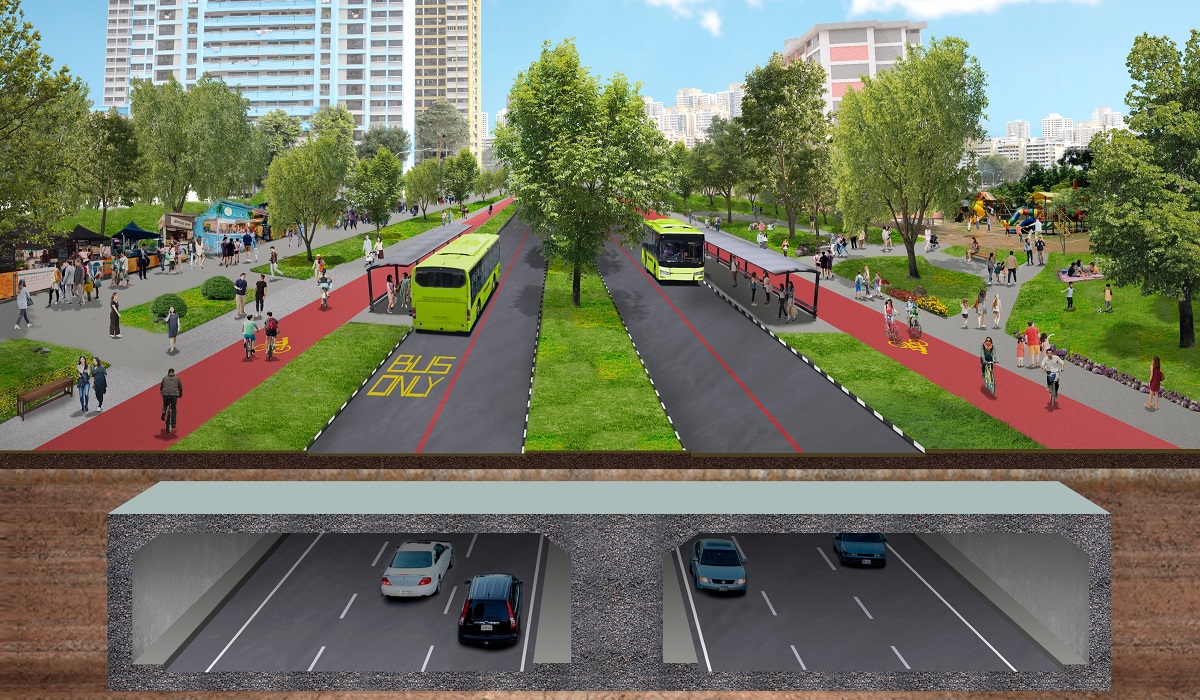
The project is expected to cut travel time by up to 15-20 minutes for north-south commutes, while the continuous bus lanes should improve bus reliability and speed, especially during peak hours. Serving as an alternative for the CTE, the corridor should help ease congestion overall and supports decentralisation by making northern districts more accessible without relying solely on the MRT.
Sungei Kadut Eco-District transport integration
Historically, Sungei Kadut functioned as a low-density industrial zone, reliant on road-based logistics and private transport, with limited access to mass transit. This is set to change with the introduction of the Downtown Line extension, which will bring a new MRT station directly into the district, alongside an interchange with the North–South Line.
At the same time, the transport strategy extends beyond rail. Internal mobility networks within the Eco-District are expected to prioritise pedestrian movement, cycling, and last-mile connectivity, linking workplaces to nearby amenities and public spaces. This reflects a broader shift toward creating a “live-work-play” environment, where industrial activity is integrated with lifestyle and community functions rather than segregated from them.
The Future of Homes in Kranji’s Turf Club
At the end of the day, this leads us to the most important question: what will the future Turf Club housing estate look like?
The redevelopment of the former Singapore Turf Club marks a new chapter for Kranji. What was once a vast racecourse at the edge of the island is set to become a residential precinct, with around 14,000 homes planned within the area’s green network, including the Kranji Nature Corridor and Rail Corridor.
But this is not just about adding homes. It is about putting land to more efficient use in a part of Singapore that has long sat on the margins. With the Downtown Line extension, Sungei Kadut Eco-District, and Woodlands Regional Centre taking shape, Kranji is being drawn into Singapore’s wider decentralisation push, where housing, jobs, transport, and amenities are weaved closer together beyond the city centre.
New homes here will be crucial to supporting that shift. As employment nodes and infrastructure mature in the North, housing demand could follow from buyers seeking access to emerging workplaces without being anchored to the central region. Kranji’s appeal may lie in this balance: better connectivity, room for growth, as well as a greener and less conventional setting.
For developers, the former Turf Club site offers a rare canvas. Large, clearly demarcated plots of this scale are few and far between in land-scarce Singapore, especially when backed by a wider pipeline of masterplan developments.
If planned well, future projects in Kranji could offer more than homes near nature—they could define a new residential address shaped by the next phase of growth in the North.
I confirm that I have read theprivacy policy and allow my information to be shared with this agent who may contact me later.
