National Day Rally 2026: What the Latest Housing Announcements Mean for You and Singapore’s Property Market
- Stanley Lim
- 6 min read
- Blog
- 28 Aug 2026
From higher income ceilings for Build-to-Order (BTO) flats and Executive Condominiums (ECs) to additional ballots for first-timer families based on their number of children, Prime Minister Lawrence Wong’s third National Day Rally (NDR) speech has brought plenty of good news for homebuyers in 2026.
These changes essentially give Singaporeans more options to consider as they plan their property purchases, especially with greater borrowing power and extra balloting chances now in their hands. So, whether you are purchasing your first HDB flat or EC, or simply thinking about your next move in the property market, here is a closer look at the latest policy announcements from NDR 2026 – and also what they could mean for your housing journey down the road.
1. Higher income ceiling for both BTO and ECs gives Singaporeans more housing options
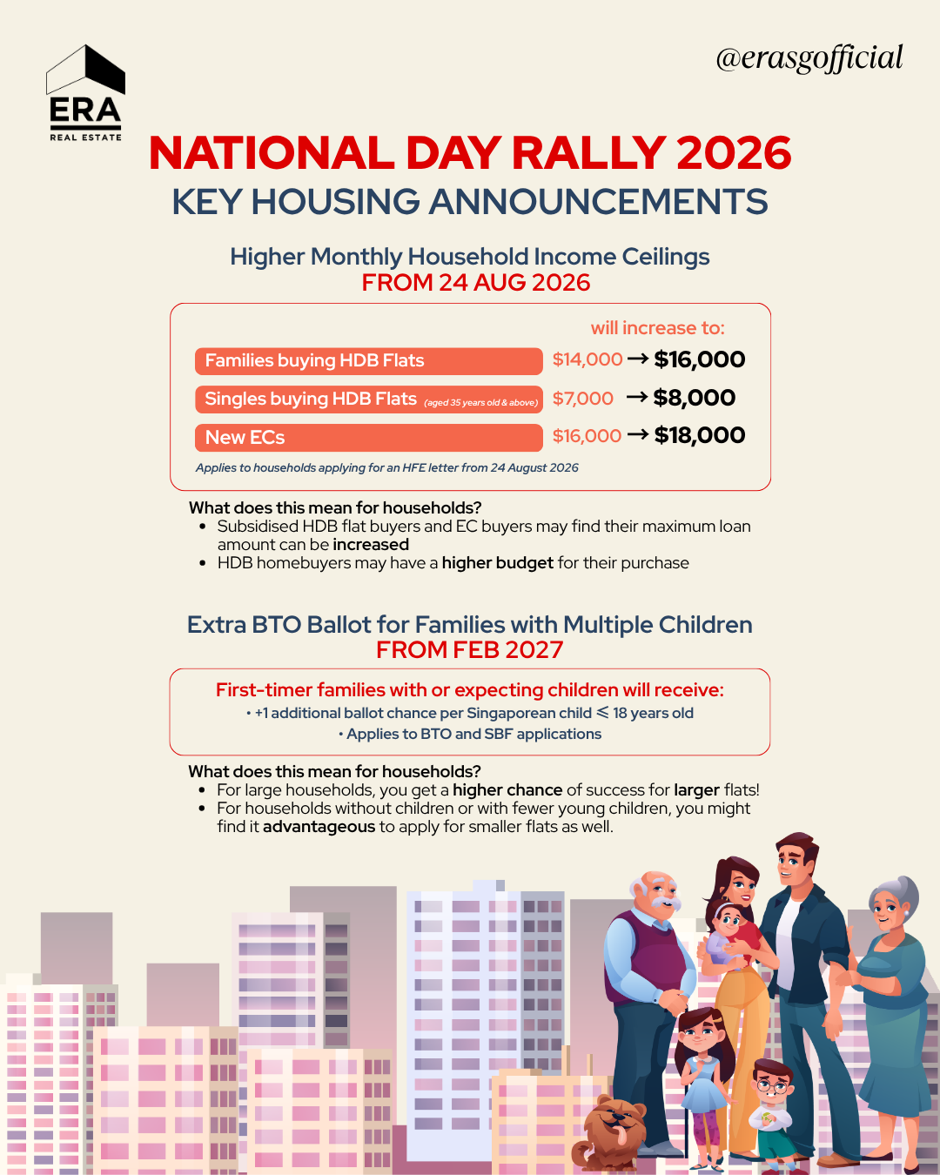
With the latest changes to the respective income ceilings for BTO flats and ECs, aspiring homebuyers whose monthly household incomes exceeded the old thresholds may now have more options available, as the limits have been raised from $14,000 to $16,000 for BTO flats and from $16,000 to $18,000 for ECs.
Table 1: Mortgage breakdown for HDB flats based on different household income ceilings*

For instance, in the case of BTO flats, the new monthly household income ceiling of $16,000 would allow homebuyers to afford HDB flats priced up to around $1.35 million, compared with $1.18 million under the previous ceiling. They would also be eligible for an HDB loan of up to approximately $1.01 million, higher than the previous quantum of $885,000. That said, this would also come with a higher monthly repayment of $4,800 should they choose to maximise their housing budget.
Table 2: Mortgage breakdown for ECs based on different household income ceilings*

Likewise, EC buyers would also see their purchasing power increase under the higher income ceiling. Assuming a 30-year loan tenure and no existing debt obligations, buyers earning a household income of $18,000 would be able afford an EC priced up to around $1.51 million, based on the current 4.0% p.a. stress test rate. In comparison, under the previous ceiling of $16,000, they would only be able to afford an EC priced up to about $1.51 million.
In turn, their maximum loan quantum would increase from about $1.01 million to $1.13 million. Their monthly repayment would also rise, from $4,800 to about $5,400.
From a housing accessibility perspective, these new income ceilings could widen access to both BTO flats and ECs, while giving higher earners more room to consider larger or pricier homes. That said, if they choose to maximise their purchasing power, this decision also comes with higher repayment commitments, which should definitely be carefully weighed against other longer-term financial considerations.
Table 3: Existing EC sites where the new $18,000 income ceiling will apply (as at 23 August 2026)

For EC buyers, it is also worth noting that the revised income ceiling of $18,000 will apply only to new units from land parcels with tender closing dates on or after 24 August 2026. It will not extend to unsold units in existing EC projects as well.
2. Extra ballot chance to give first-timer families a better shot at a BTO or Sales of Balance Flat (SBF)
Alongside the increased income ceilings for HDB flats and ECs, it was also announced during this year’s National Day Rally that first timer families will receive one additional ballot chance for public flats for every Singaporean child aged 18 and under. Applicant couples who are expecting a child will also stand to benefit from this new measure.
Table 4: Additional balloting chances for first-timer families
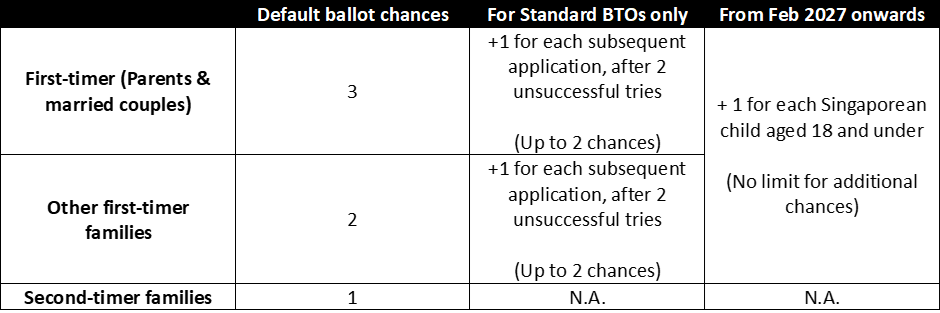
With additional ballot chances, qualifying families may have a better chance of securing a home sooner. This could be especially helpful for young families, who often need greater certainty as they plan around schooling, caregiving and other housing needs. By leveraging on Singapore’s public housing system, this measure could give the Government’s efforts to support marriage and parenthood a much-needed boost.
3. November BTO exercise and larger resale flat pipeline to add more housing options
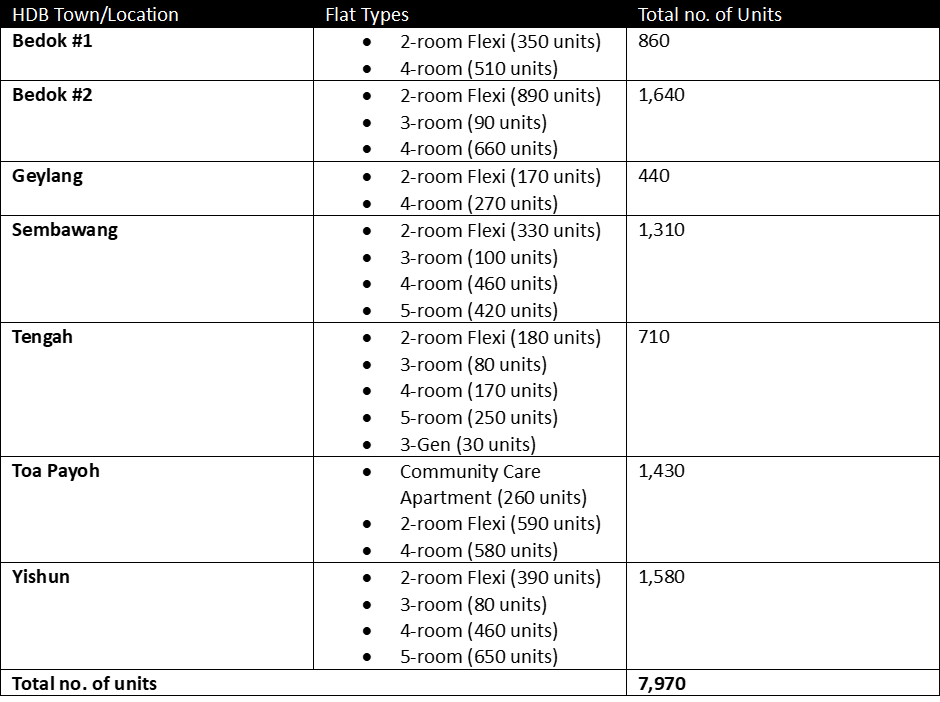
Amid the slate of new NDR announcements aimed at improving Singaporeans’ access to public housing, it is natural for many to wonder whether HDB flat supply can keep pace with the expected increase in demand. However, there is little cause for concern, especially with a larger pool of flats fulfilling their Minimum Occupation Period (MOP) expected to enter the resale market, alongside additional BTO supply before the end of the year.
While the final BTO launch of 2026 has been pushed back from October to November, it will offer more flats than June’s launch, which saw an injection of 6,952 units. Including Bedok, Geylang, Sembawang, Tengah, Toa Payoh, and Yishun, the upcoming exercise will offer 7,970 units across six HDB towns.
In other words, homebuyers will have plenty of options to choose from, with a range of locations and flat types available across both mature and non-mature estates. This will likely help with easing some of the pressure from heightened demand, while also giving applicants more flexibility in finding a home that suits their needs.
At the same time, those looking to move in sooner will find more options in the resale market this year, with around 13,500 flats expected to complete their MOP in 2026. This figure is also projected to rise to 15,000 next year and reach 19,500 in 2028.
Ultimately, as a growing number of flats reach the end of their MOP, buyers can expect a wider selection of resale HDB homes, while existing owners may have greater opportunities to sell amid healthier market interest. Considering your next move? Speak to an ERA Trusted Adviser today to explore your options, and take the next step of your property journey.
I confirm that I have read theprivacy policy and allow my information to be shared with this agent who may contact me later.
