
New Executive Condominium (EC) Rules in 2026: What Market Impacts Can We Expect?
- Stanley Lim
- 7 min read
- Blog
- 11 May 2026

With Executive Condominium (EC) prices climbing and demand for new EC launches staying hot, everyone has been wondering when the other shoe will drop on the policy side. So, it is not a big shocker that we are seeing new measures announced now, which will help keep the EC market sustainable for the longer haul.
Since the Government’s announcement earlier this March that it would be reviewing EC policy following affordability concerns, specific steps have been revealed about how the Ministry of National Development (MND) intends to keep ECs accessible for today’s buyers.
So, what are these latest rule updates? And more importantly, what could they mean for the EC market and your homeownership journey? We break down the key takeaways from this latest announcement and how they might re-shape the landscape for EC purchases moving forward.
What are the new rule changes announced for Executive Condominiums?
On 8 May 2026, National Development Minister Chee Hong Tat announced a series of new policy changes concerning EC ownership and purchases. In short, they entail the following:
- Longer Minimum Occupation Period (MOP):
The MOP for ECs (i.e., the mandatory period that EC owners must physically reside in their unit) will be raised from the current 5 years to 10 years.
Following that they can freely rent out their whole unit, purchase another residential property, or sell their EC to a Singaporean Citizen or Permanent Resident. However, if the EC unit is sold to a foreigner, an even longer MOP of 15 years will apply.
- Removal of the Deferred Payment Scheme (DPS):
The DPS is a payment scheme that allowed new EC buyers to defer the bulk of their property’s cost (typically 80%) until it is completed. Or put differently, under the DPS, only 20% of an EC’s purchase price has to be paid upfront as a down payment.
However, this financial flexibility will be a thing of the past, as the DPS will no longer be offered for uncompleted ECs, with only the Normal Payment Scheme (NPS) applicable, not unlike in the private condominium market.
- Increased Quota + Extended Priority Period for First-Timers:
Moving forward, first-timers will enjoy higher chances of securing an EC, as their allocation quota at new launches will be raised to 90%, up from the previous 70%. Additionally, the priority period for first-timers will be raised significantly, from one month to two years.
Last but not least, these new rules will apply to all EC Government Land Sale sites with tender closing dates on or after 8 May 2026.
How could these new EC rules shape buyer behaviour and developer sentiment?
With these new rules now in place, there is now a clear path ahead for the EC market to find a more balanced footing. But if you are curious about knowing more, here is a specific breakdown of what outcomes we might see next:
Outcome #1: The longer MOP will aid in curbing speculation, while ensuring ECs cater more to owner-occupiers
With the MOP of ECs extended to at least 10 years (or 15 years in cases involving foreign resale buyers), this will mean that future owners will now have to commit to a longer holding period.
In turn, this is likely to reinforce the new role of ECs as a housing option for purchasers with genuine owner-occupation intent, as opposed to those seeking to make quick gains after five years.
Looking back to before the new MOP rule, a likely sign that investment-minded EC owners were indeed looking to lock in their gains early is the huge spike in resale transaction volume that usually takes place at OR shortly after EC projects exit their five-year MOP.
Chart 1: Resale transaction volume at ECs that exited MOP in 2020 by year (2020 – 2025)
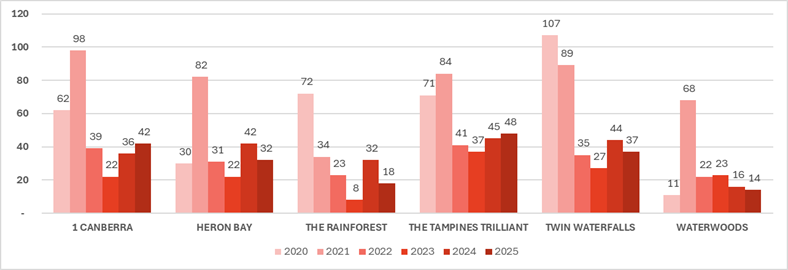
For instance, among completed EC projects (i.e., 1 Canberra, Heron Bay, The Rainforest, The Tampines Trilliant, Twin Waterfalls, and Waterwoods) that obtained their Temporary Occupation Permit in 2015, there was a noticeable spike in resale activity between 2020 to 2021, soon after their MOP ended.
However, by the time of the 10-year mark in 2025, the number of resale units changing hands at these projects had fallen to a smaller fraction of their post-MOP peak. This supports the idea that secondary market activity in ECs is driven by owners who are looking to exit soon after their homes become eligible for resale.
A longer MOP helps address this phenomenon by increasing the holding time required of future EC owners, while effectively limiting their ability to cash out sooner. Combined with other measures favouring first‑timers, such as a longer priority period and a larger quota, this will help better position ECs as a housing option for genuine occupant-owners, rather than profit-driven investors.
Outcome #2: Second‑timers will be hit hardest by the new rules, including the scrapping of the DPS and the two‑year wait to buy a new EC
For second‑timers, the removal of the DPS and the longer wait to enter the new EC market are the two changes they will feel most keenly. Under the new rules, they must wait for two years before becoming eligible to purchase a new EC, which is a tangible delay for their upgrading plans.
Moreover, this may reduce their chances of securing a preferred unit, as first‑timers will have the upper hand during the extended two‑year priority period by getting first access to new ECs without direct competition from second‑timers – who will now be pushed further down the queue.
Figure 1: Deferred Payment Scheme and Normal (Progressive) Payment Scheme
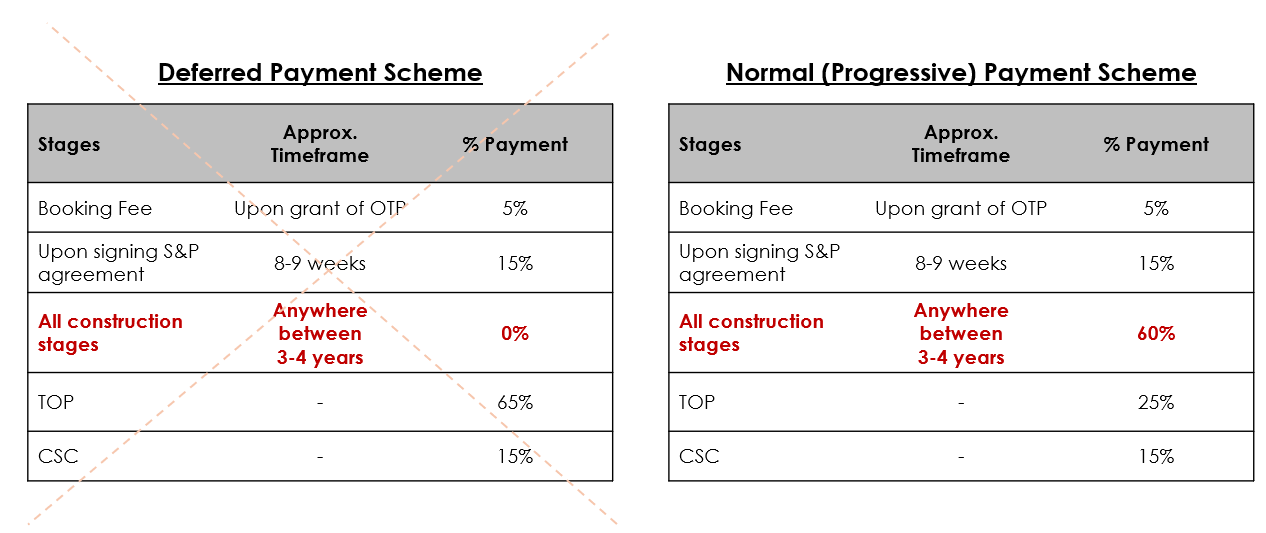
At the same time, removing the DPS means second-timers will now have to make larger upfront cash payments for a new EC. Unlike the DPS, which lets buyers hold off on most payments until after TOP, the NPS requires about 60% of an EC’s price to be paid in stages as the project is being constructed.
But even more crucially, second‑timers with a mortgage on an existing property will need to plan their finances more carefully, since they will likely be juggling progress payments for a new EC (under the NPS), alongside their ongoing mortgage obligations.
Outcome #3: Developers will recalibrate their EC GLS site acquisition and pricing strategies
Looking ahead, developers are likely to take a more measured approach when bidding for new EC Government Land Sales (GLS) sites, specifically those with tender closing dates on or after 8 May 2026.
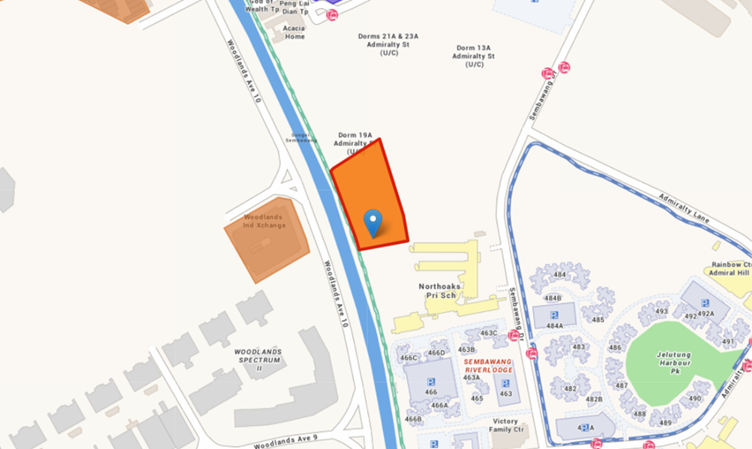
Based on this cutoff, GLS sites on the 1H 2026 Confirmed List that will be subject to the new EC rules include Canberra Drive and Sembawang Drive. These GLS parcels are both located in Singapore’s northern region, and their bidding windows are scheduled to open in May and June this year, respectively.
Figure 2: Location of Canberra Drive (1H 2026) GLS site
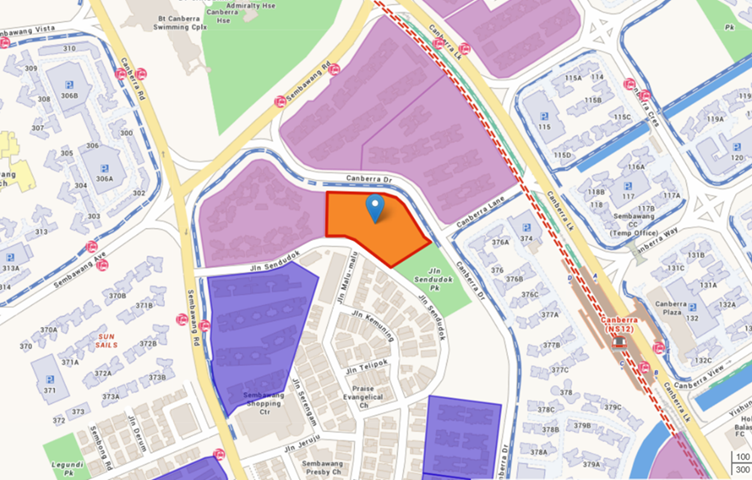
Figure 3: Location of Sembawang Drive (1H 2026) GLS site
As such, both Canberra Drive and Sembawang Drive can be said to be key litmus tests for the EC market. They will give the first indication of how developers will respond to the new rules, in terms of bidding interest and how competitive their offers will be. This could also dampen GLS activity in the EC segment, as developers take a more conservative approach to acquiring new sites.
Just as importantly, the new rules will also show how developers are going to adjust launch prices to better reflect a buyer pool where first-timers take greater precedence. As this buyer segment is more price sensitive, developers could become more cautious in setting launch prices, so as to better balance affordability with the need to maintain healthy demand and sales momentum.
What current and upcoming ECs can buyers consider today?
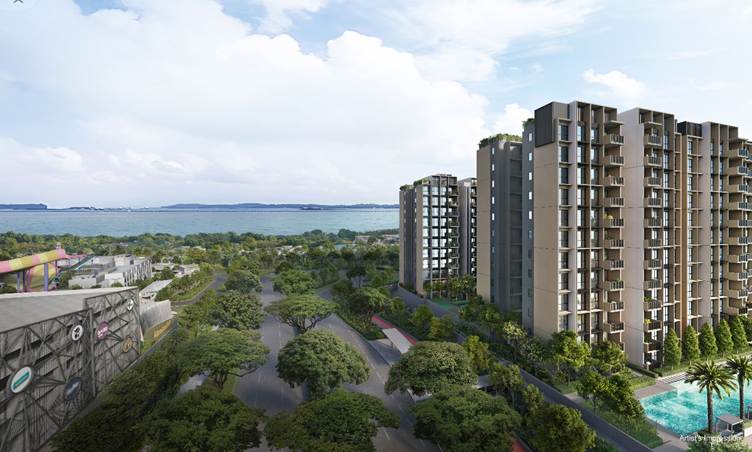
At the moment, new EC supply remains tight, with only Coastal Cabana in Pasir Ris still having available units. Even then, stock levels at Coastal Cabana are low, with just around 18 percent or 138 units remaining (as of 12 May 2026).
Figure 4: Upcoming EC launches not affected by the change
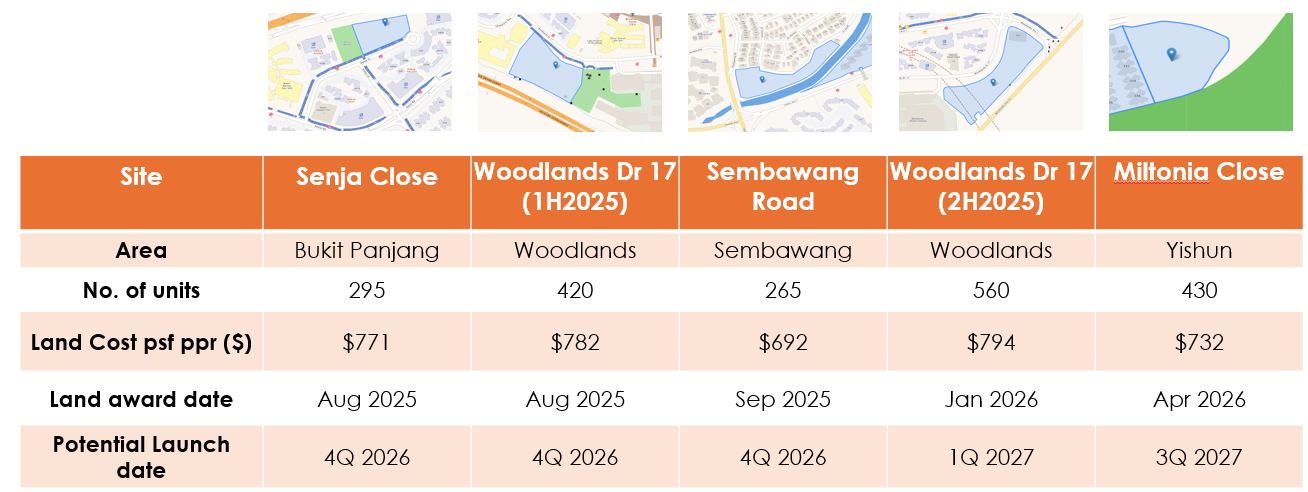
However, if you are willing to wait a little longer, at least five EC sites are expected to launch soon. These include developments at Senja Close, Sembawang Road, Miltonia Close, and two sites at Woodlands Drive 17.
These projects are likely to debut between 4Q 2026 and 3Q 2027. More importantly, they will not be subject to all of the newest EC rules, including the increased quota and extended priority period for first-timers.
So, second-timers take note.
I confirm that I have read theprivacy policy and allow my information to be shared with this agent who may contact me later.
