
Old Buildings, New Concept: Reimagining Food Production at the Heart of Singapore
- Egan Mah
- 6 min read
- Blog
- 26 Feb 2026
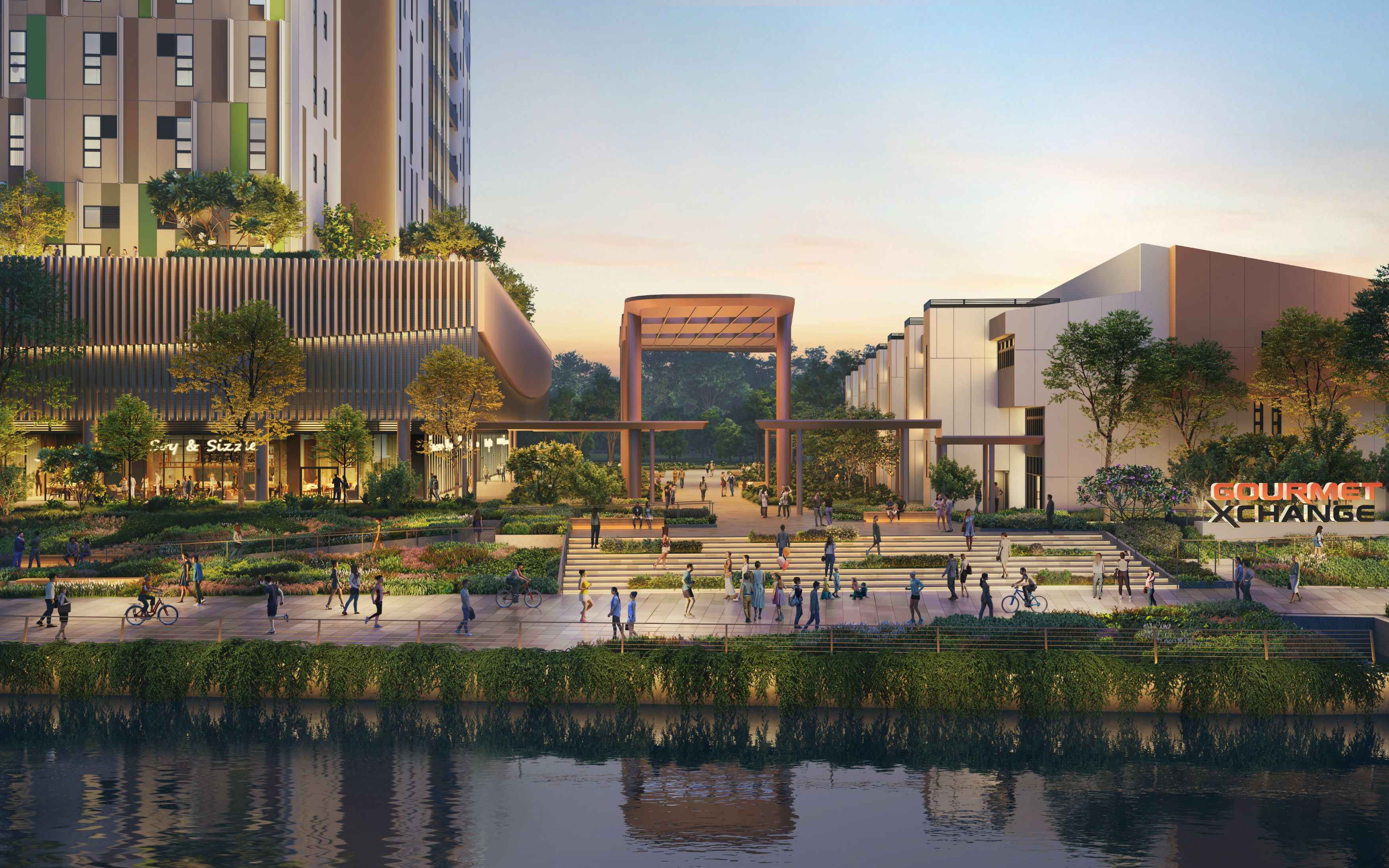
In November 2024, Capitaland Development was awarded a 4.41ha industrial site in Kallang Way under the Industrial Government Land Sales (IGLS) Programme. As part of the tender requirements, a portion of the site includes an existing building adapted for industrial use. JTC’s intention was for developers to adopt sustainable practices in the estate’s development while preserving the architectural legacy of Singapore’s industrial properties. This marks the first time an IGLS site has been sold in this manner.
Located within the Kolam Ayer Industrial estate in Kallang, these three-storey terraced industrial units were built in the 1980s. At the time, buildings may not have been planned, designed, and built to meet today's needs. Economic and societal needs have changed, and the industrial landscape is different now. The land use may not be optimised, and the building designs may be dated.
In addition, we often see centrally located sites used for high-rise housing blocks rather than low-rise industrial buildings. However, a portion of the Kallang site will not be intensified, unlike the surrounding residential estates, including Macpherson, Geylang Bahru and Kallang.
Thus, some may argue that it would have made more sense to demolish the buildings and redevelop from scratch.
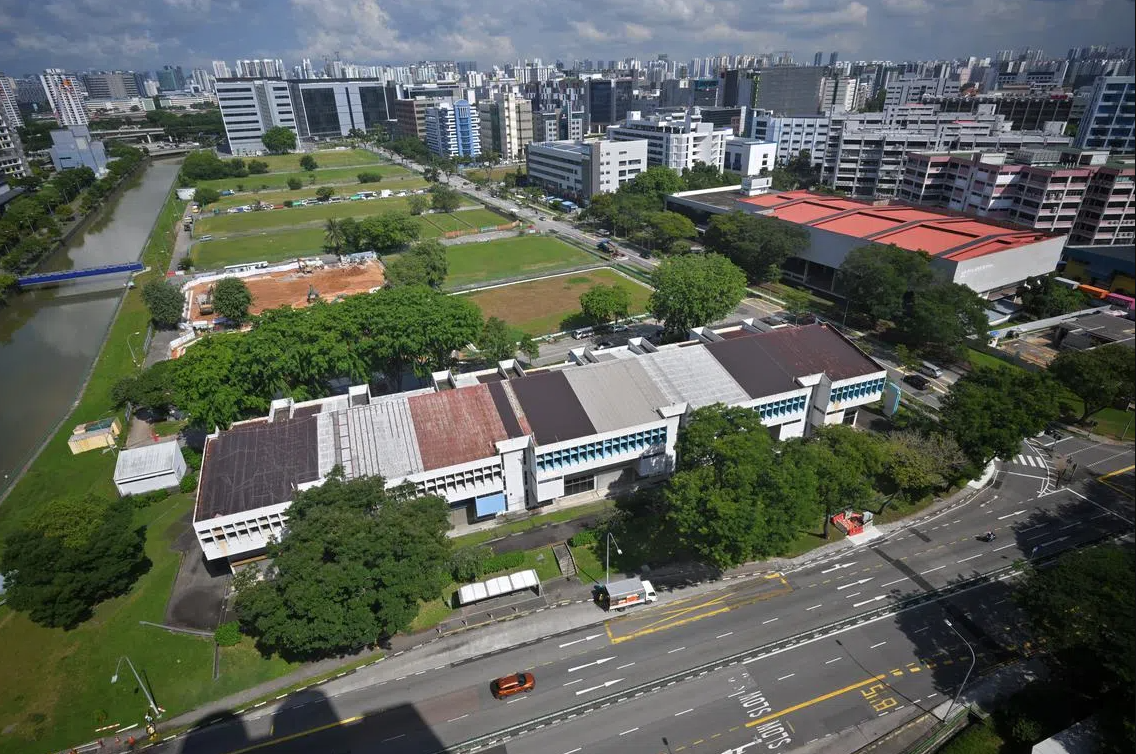
Adaptive Reuse – a Mix of Old and New
The built environment sector has had to balance conservation and redevelopment to meet changing economic and societal needs. Integrating adaptive reuse, the process of renovating and repurposing existing buildings, is one way to “breathe new life” into buildings. The benefits include carbon savings from avoiding teardowns and rebuilds, while cost savings come from using fewer new construction materials and a shorter construction timeline.
It is also a creative way to redevelop ageing industrial estates, supporting rejuvenation efforts. The building and estate will retain the ‘soul’, including the building's historical and sentimental aspects, thereby protecting its identity.
Owning a unit is akin to owning a piece of Singapore’s history. These buildings are ‘protected’ in the same way as shophouses, which cannot be demolished. Their conservation status makes them a rare find.
GOURMET XCHANGE – A purpose-built food factory
CapitaLand Development will develop the site into Gourmet Xchange, Singapore’s largest strata-titled food development. Located along the Kallang River, the landmark waterfront food hub will house food factories that support innovation and business growth. Its central location gives it proximity to customers, enabling faster, easier delivery.
Gourmet Xchange is purpose-built to support the full spectrum of food-related operations. From research and development (R&D) to manufacturing and central kitchen operations, it serves a wide range of end users. Food manufacturers, caterers, storage operators and central kitchen providers can be co-located there. Clustering firms across the food supply chain will improve efficiency, as agglomeration creates greater synergy and enables economies of scale. There could be greater scope for collaboration across the F&B value chain.
The nine-storey Gourmet Xchange will also feature large units, each at least 3,000 sq ft. Spaces and layouts are efficient and scalable, providing flexibility to support future business growth. It will also be the only strata food development with ramp-up access for a 40-foot container truck to the third floor.
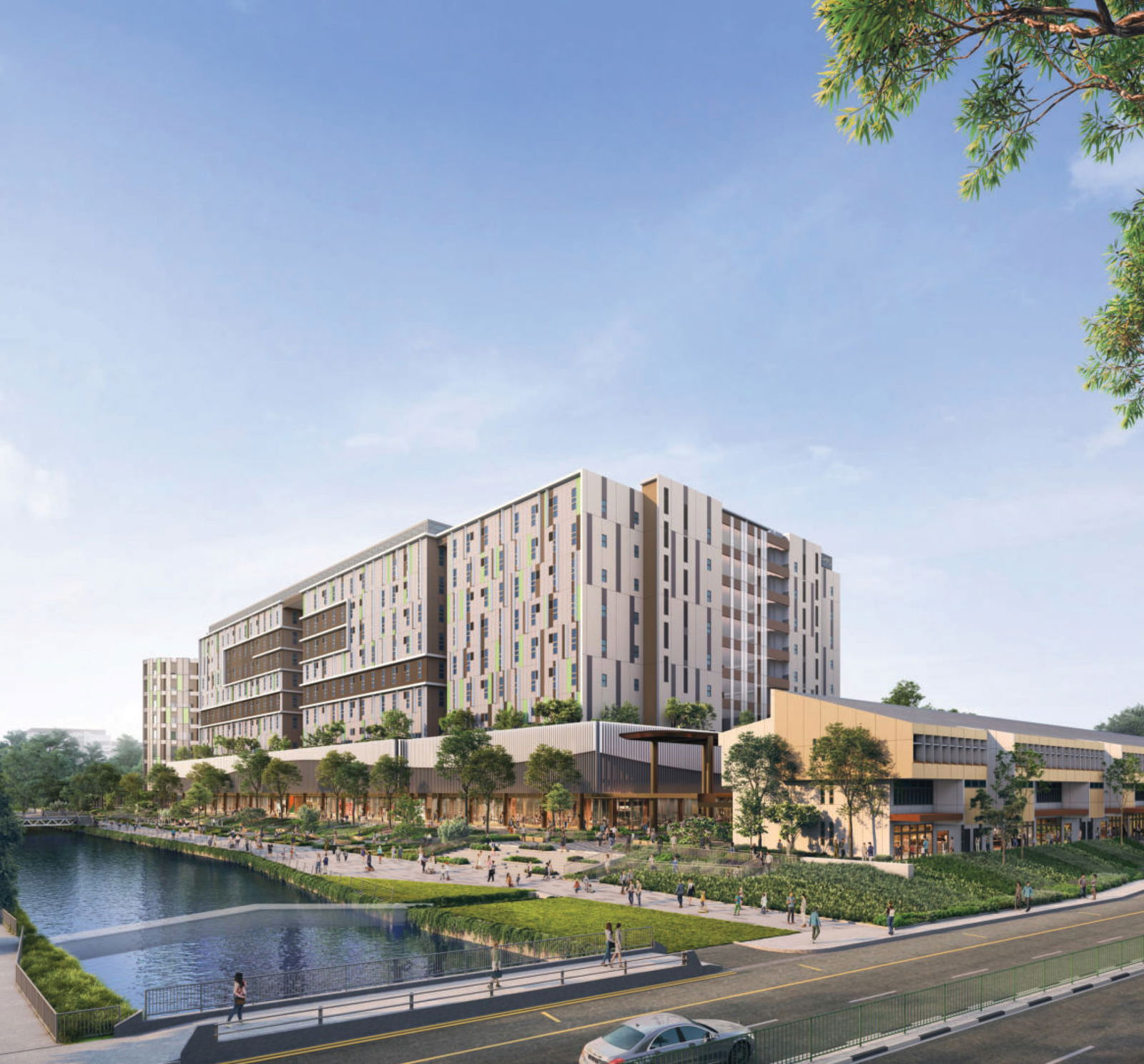
GOURMET XCHANGE will be the new landmark development as part of the Kallang Industrial Estate rejuvenation plans. The estate is poised to inject vibrancy into industrial spaces and provide new amenities for residents of surrounding estates. Coupled with the possible addition of shops, F&B spaces, entertainment outlets and health and fitness establishments, we could see higher footfall in the area. Meeting the needs of the wider community is an important factor in a firm's development.
Central Location Food Factories – Rare Find Today
Singapore’s urban planning framework adopts a long-term approach, guided by principles such as land-use zoning to separate competing and incompatible activities. Land use is also optimised by reserving strategic locations for higher-value uses that better meet citizens' needs.
Hence, new industrial estates are usually located on the outskirts of Singapore, in the far east, west, north and north-east regions. This is to ensure that the Central Area is largely composed of offices and homes. In addition, B2-Industrial sites (heavy and polluting industries and food production) require a safety buffer from residential areas. Proper land zoning and urban planning segregate sites with competing and incompatible uses.
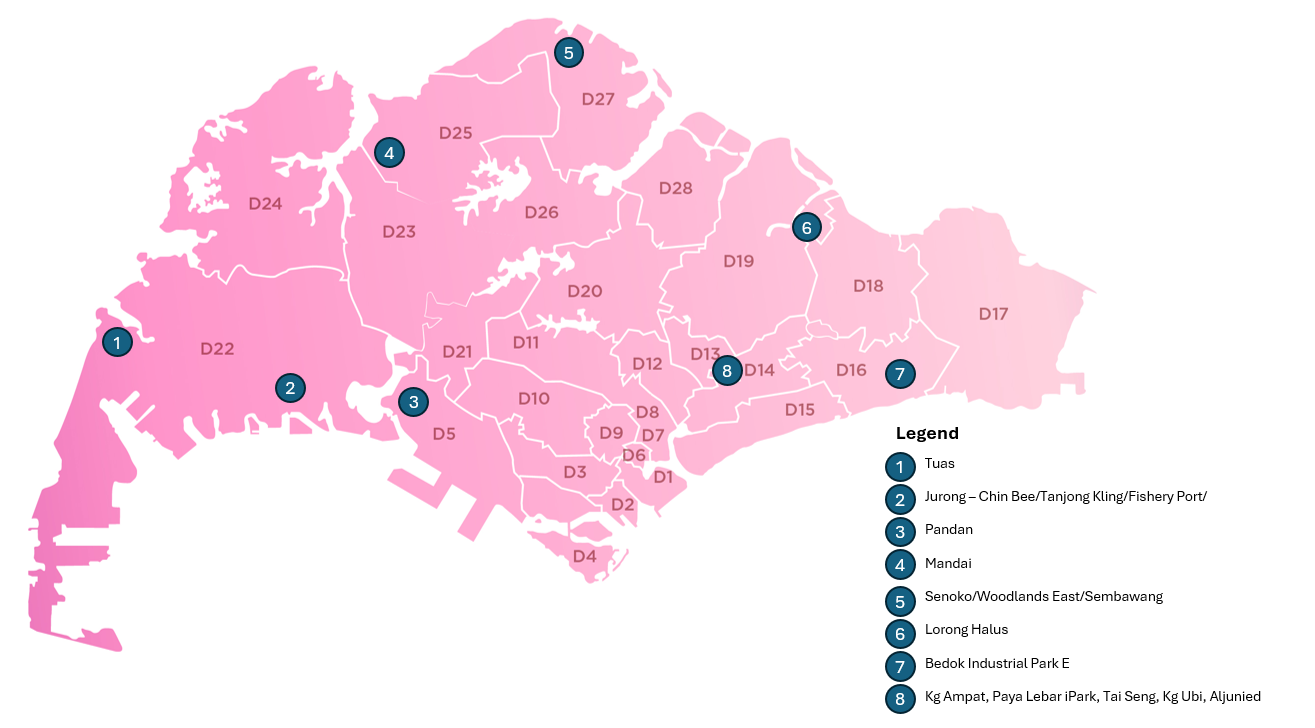
Furthermore, JTC has only eight Approved Food Factory Locations. Most of these estates are less accessible, with only one in the Central Area (Kampong Ampat, Paya Lebar iPark, Tai Seng, Kg Ubi, Aljunied), where the Kallang Avenue site is located.
This new B2 development in the heart of Singapore is poised to rejuvenate an older industrial estate. Such developments arise only through redevelopment, or in this case, through the repurposing of sites sold for adaptive reuse. It is therefore a rare find in today’s market.
Being centrally located also eases operational issues for businesses. With the site near Mattar MRT Station and surrounded by residential enclaves, it has access to a workforce pool. Additionally, it reduces the need for long delivery commutes.
Why Buying a Food Factory May Make More Sense
Industrial rents in Singapore have risen by 25.1% over the last five years, from 1Q 2021 to 4Q 2025. As a result, many businesses have been affected by rising costs. Some may have had to relocate to other, less centrally located areas, which has affected their business operations, or even caused them to cease operations altogether.
Owning a unit, on the other hand, provides stability and predictability for food operators and makes even more sense if you intend to be there long-term. As mortgage payments are affected only by interest rate changes, this also makes it easier to predict depreciation and amortisation costs for the fit-out.
Operationally, owning the space also provides more control. There is no need to deal with the landlord. Owners can change layouts and uses without the landlord's approval. With large unit sizes, any unused space may even be sublet to cover the mortgage or as a secondary source of income.
Lastly, with the scarcity of food factories in the Central Region, there is a high likelihood of capital appreciation. Even as an end-user, we could also see them making profits. Moreover, buyers of industrial properties will not need to pay Additional Buyers’ Stamp Duties (ABSD), allowing investors to own multiple properties.
Do you want to learn more about purchasing a food factory for your business or for investment purposes? Speak to any ERA Trusted Advisor today to find out more!
I confirm that I have read theprivacy policy and allow my information to be shared with this agent who may contact me later.
