
Singapore’s Emerging Estates Could Shape the Next Phase of Housing
- Ethan Hariyono
- 6 min read
- Blog
- 12 Aug 2026
This article was originally featured on Edgeprop on the 6th of August 2026, contributed by ERA Research and Market Intelligence.
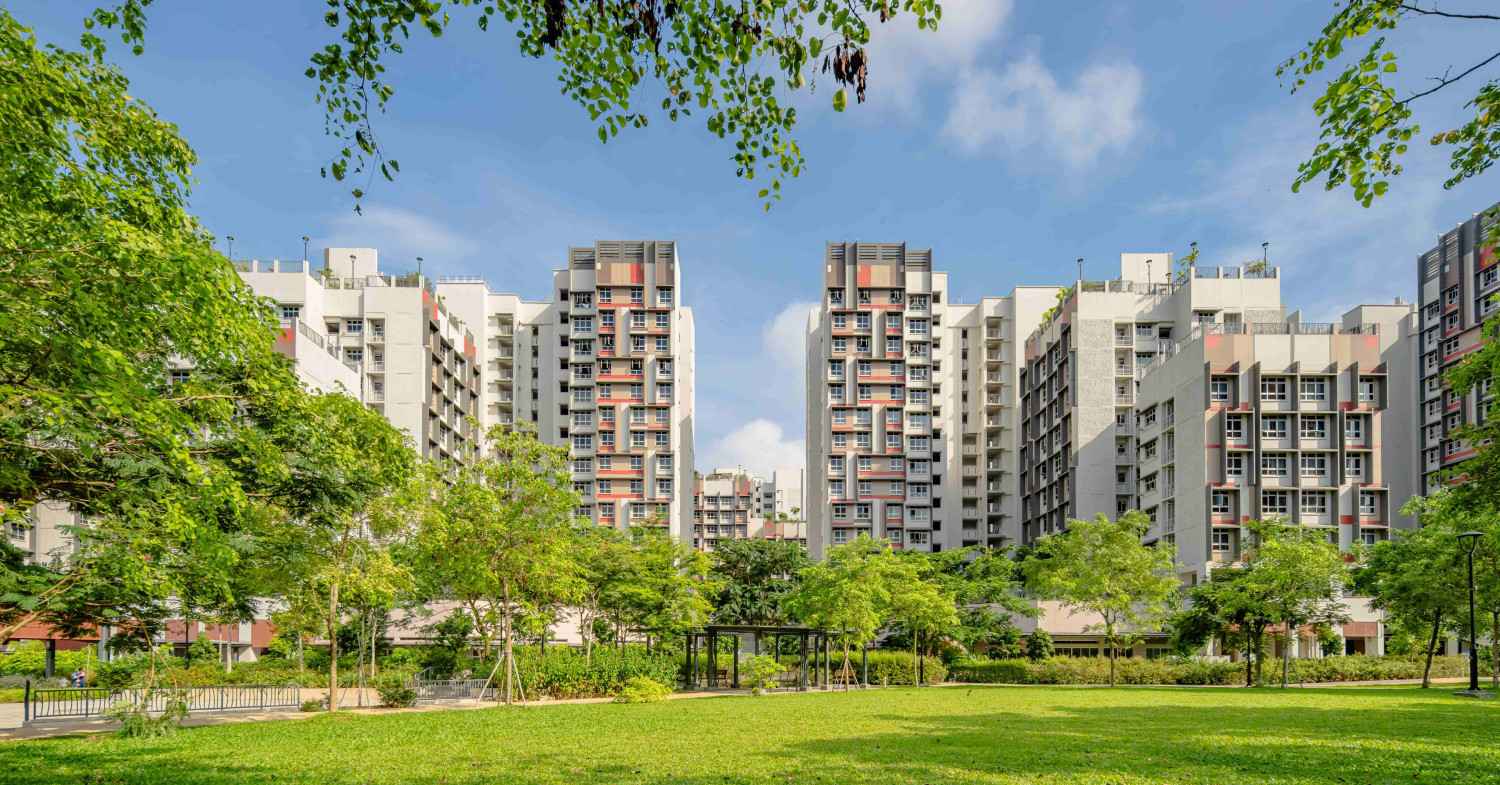
Dream home locations have long been synonymous with centrality in Singapore, but that definition is evolving. As connectivity improves across the island and new precincts mature under URA’s Master Plan, these emerging areas are presenting growth potential that was previously harder to find outside the Core Central Region (CCR).
Bayshore, Turf City and Berlayar are emerging as compelling options, each offering distinct lifestyle propositions while benefitting from strong transport links, planned amenities, community infrastructure and job creation in innovation sectors.
Bayshore, for instance, will offer connected waterfront living with strong transport and lifestyle appeal.
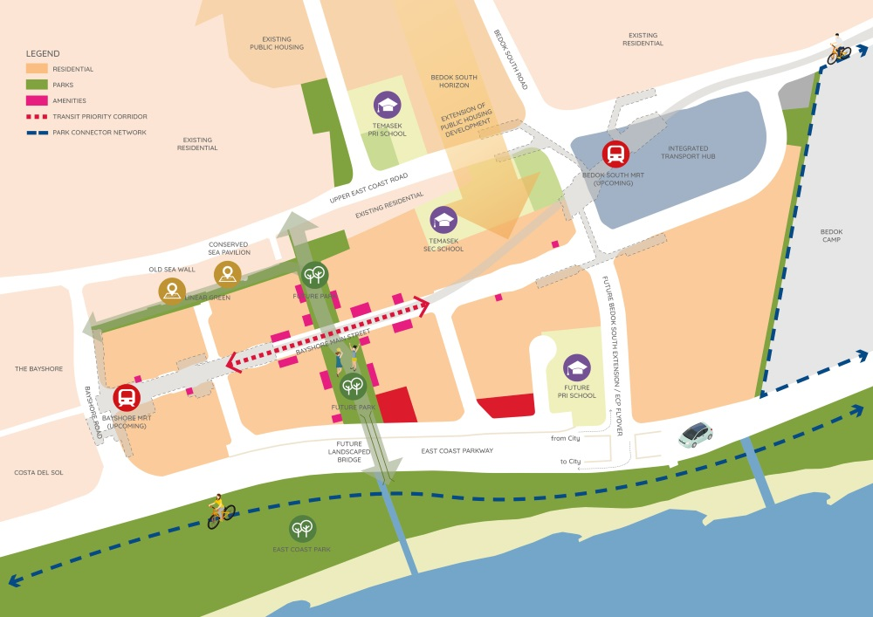
Based on URA’s Master Plan, the future Bayshore neighbourhood will sit next to East Coast Park, coupled with an integrated transport hub, central park, school, transit priority corridor and community loop. As a holistic waterfront neighbourhood, Bayshore is set to combine everyday liveability with recreational appeal – presenting a broader concept of “prime” central living.
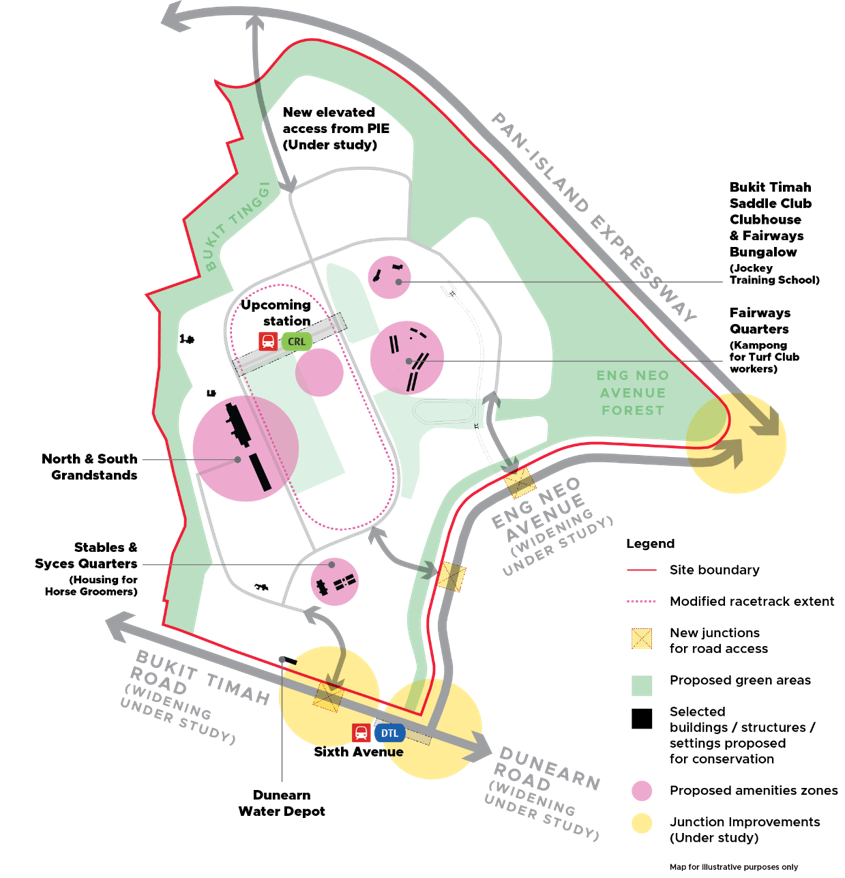
Bukit Timah’s Turf City offers another unique proposition, with plans to transform the former racecourse site into a new housing estate interwoven with greenery and heritage. Located in the low-density and exclusive Bukit Timah enclave, the precinct’s upcoming HDB flats – the first in over 40 years – and non-landed, 99-year leasehold private projects offer another compelling notion to prime living. Its appeal stems from a character which is closely tied to the site’s history and surroundings. For buyers, its distinctive setting, long-established neighbourhood reputation and relative scarcity may justify a premium even without traditional CCR centrality.
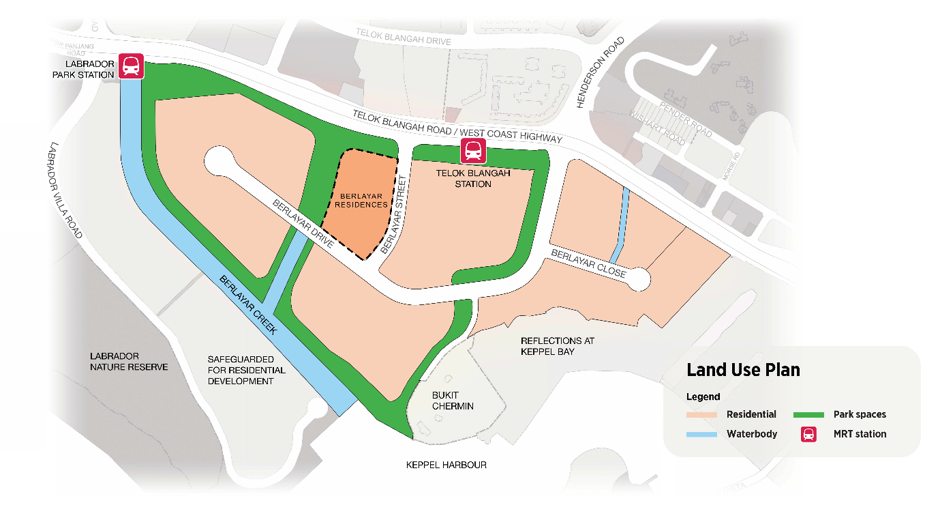
Meanwhile, Berlayar and Keppel tell another transformation story. With 10,000 public and private homes planned across the former Keppel Golf Course near HarbourFront and Sentosa, Keppel broadens the appeal of waterfront living by pairing a coastal setting with city-fringe accessibility and a substantial mix of public and private housing. By anchoring new homes within the wider Greater Southern Waterfront vision, Berlayar combines immediate lifestyle appeal with long-term transformation potential, a mix increasingly valued by today’s buyers.
Character may become the next big premium amplifier
As connectivity gaps narrow across Singapore, a precinct's identity is increasingly what sets it apart. When accessibility is no longer a differentiator, character becomes one. A neighbourhood's distinctiveness, whether rooted in its natural landscape, cultural legacy, lifestyle offering or sense of community, can strengthen both its desirability and pricing power.
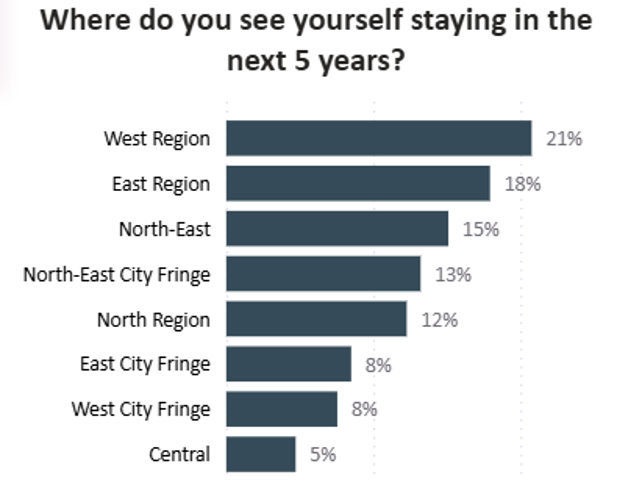
Early signals of this shift are already visible among young homebuyers. According to ERA’s 2025 My Dream Home survey, Gen Z and millennials expressed a strong preference for regions such as the West’s Jurong Lake District and Tengah, Bayshore in the East, and Punggol and Hougang-Defu in the North-East. This suggests that for younger Singaporeans, factors such as future potential, community and lifestyle fit can outweigh legacy ideas of centrality when choosing where to live.
For developers, shaping a compelling neighbourhood proposition is increasingly critical. Connectivity and affordability remain important, but buyers also need a clear vision of how the area will evolve, what sets it apart and why its appeal will endure after the initial novelty fades. A well-defined vision can ultimately strengthen demand, take-up and pricing power.
Housing premiums are becoming more personalised
Housing value is becoming more personal, selective and lifestyle-driven, with buyers today assigning value based on the kind of life they want a home to support – whether that is convenience, family proximity, the landscape, amenities or long-term upside.
Buyers are increasingly looking beyond broad location labels and assessing homes by how well they fit their needs. Convenience, family proximity, greenery, amenities and long-term upside can each command different premiums depending on the buyer profile. As preferences become more personal and selective, emerging estates that offer clear lifestyle propositions and practical day-to-day liveability may gain stronger pricing power over time.
Chart: Non-mature million dollar flats are making up a greater portion of million-dollar flat transactions islandwide
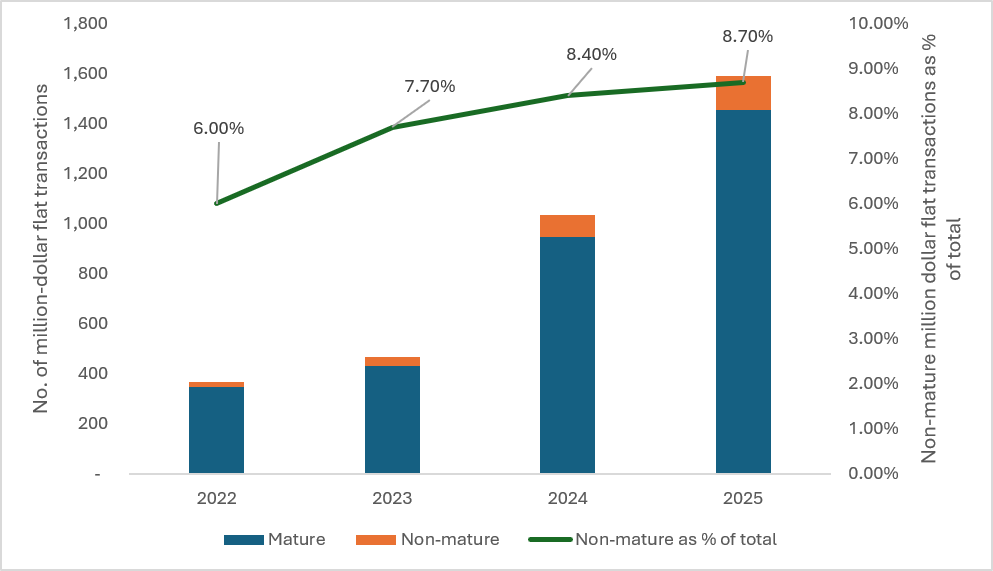
This shift is also visible in the million-dollar flat market. Previously, such resale transactions were largely concentrated in mature estates like Queenstown, Toa Payoh and Bishan, where buyers paid premiums for established amenities and central or city-fringe locations.
Since 2022, however, million-dollar deals in non-mature towns have become more common, with their share rising from 6.0% in 2022 to 8.7% in 2025, supported by more non-mature flats reaching MOP and entering the resale pool. While mature estates still dominate, this spread of high-value transactions suggests that buyers are increasingly prepared to pay top dollar beyond central areas when a home and its precinct align with personal lifestyle needs and long-term priorities.
The changing geography of housing value
Without a doubt, central locations remain prime, given their undeniable locational attributes and mature community but there are many other benchmarks for value today. A new generation of buyers, planning for the medium to long term, are more open to emerging precincts beyond the CCR.
This means assessing homes through a longer-term lens, reviewing an area's potential for transformation, including future transport upgrades, planned amenities and public infrastructure. Owner-occupiers may benefit from buying into a precinct before it fully matures, provided they are comfortable some short-term trade-offs in amenities or vibrancy.
Investors should note that not every emerging precinct will yield strong rental demand or resale liquidity. Demand depth, rental resilience and credible long-term transformation drivers should be prioritised, rather than chasing the novelty of a new area.
The focus for developers needs to shift towards storytelling - clearly articulating the lifestyles that location can support, how the neighbourhood’s identity is expected to mature, and what it would look like in future.
In short, Singapore's housing market is not leaving location behind. Rather, how buyers define a desirable location is evolving. Prime areas will continue to hold their value and appeal, but they are no longer the only reference point for desirability as the conversation shifts towards practicality, identity and future integration.
As emerging precincts mature, they present genuine growth potential alongside established addresses, supported by thoughtful planning and differentiated offerings. Homebuying no longer conforms to a one-size-fits-all formula, and what one buyer values in a dream home increasingly shapes where they choose to live.
The industry, in turn, will need to support an evolving range of priorities and aspirations among today’s homebuyers. The most compelling precincts of the next cycle may therefore be those that balance accessibility, a strong sense of place and credible long-term potential.
I confirm that I have read theprivacy policy and allow my information to be shared with this agent who may contact me later.
