
Why Industrial Properties Deserve a Place in Your Real Estate Portfolio
- ERA Singapore
- 6 min read
- Blog
- 14 May 2026
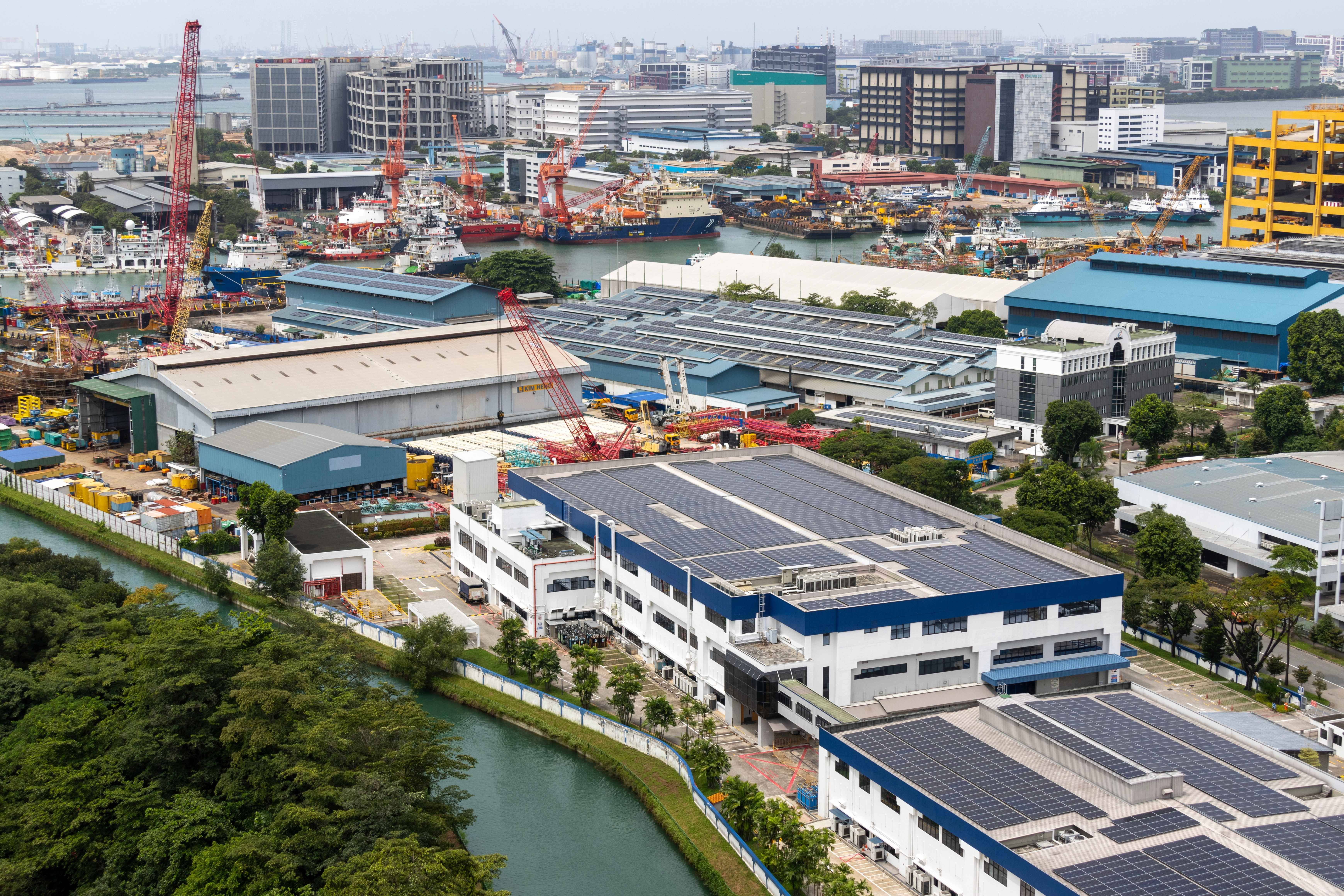
Industrial properties are often overlooked compared to residential properties, but they remain a key part of Singapore’s real estate market.
Unlike residential properties, which are driven mainly by household demand, industrial properties are supported by demand from businesses that need the space to produce, operate, distribute and fulfil customer needs. Hence, investors looking to diversify their real estate portfolio might want to consider industrial properties. This makes industrial property worth considering for investors looking to diversify their real estate exposure.
Manufacturing Remains a Key Pillar of Singapore’s Economy
Singapore’s industrial property market is closely related to its economy, particularly the manufacturing sector which is a key economic pillar, supporting a broad ecosystem of factories, logistics, warehousing, engineering, biomedical, and electronics manufacturers.
Recent data suggests that manufacturing activity in Singapore has remained healthy, despite much uncertainty due to the ongoing war in the Middle East. Both manufacturing output and exports activity remained generally resilient and showed strong rebound in March, indicating that underlying industrial activity remains robust.
Chart 1: Index of Industrial Production y-o-y Change
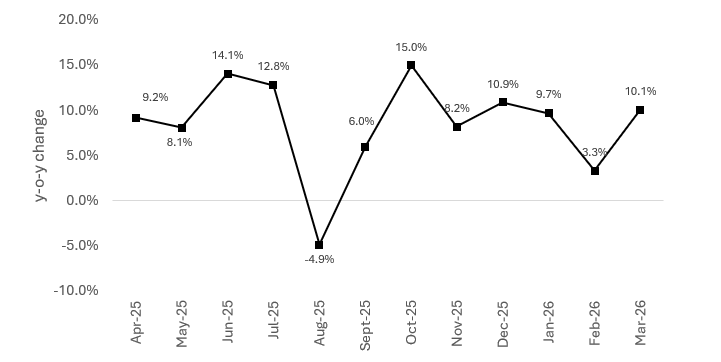
Chart 2: Non-Oil Domestic Exports and Manufacturing Exports
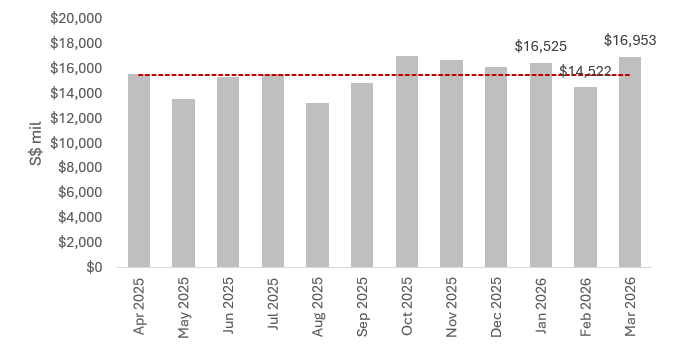
Chart 3: Purchasing Manager Index
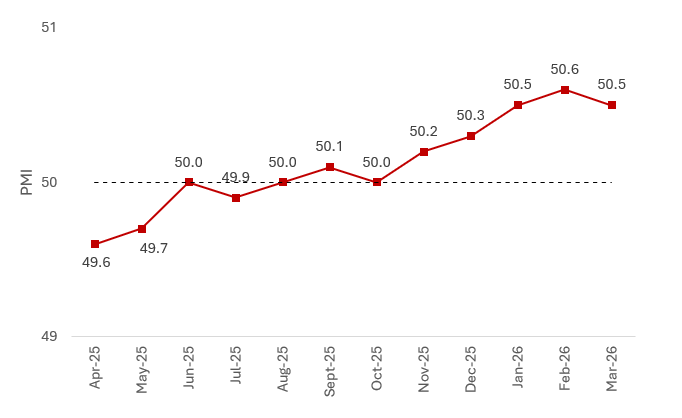
The Purchasing Managers’ Index (PMI) has remained above the neutral 50.0 mark since August 2025, reaching 50.5 in March 2026. A PMI reading above 50 indicates that manufacturing conditions are expanding while a reading below 50 indicates that a contracting manufacturing sector.
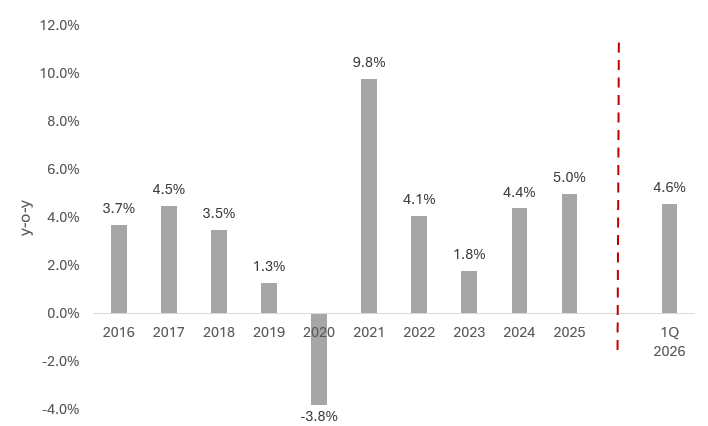
At the broader macro level, Singapore’s economy has also remained on a steady growth path. GDP grew by 5.0% year-on-year in 2025 and 4.4% year-on-year in 2024, reflecting stable economic expansion. This momentum continued into 1Q 2026, with GDP expanding by 4.6% year-on-year.
Chart 4: Singapore GDP y-o-y Growth
Taken together, these indicators suggest that manufacturing activity remains healthy and resilient, which should continue to support demand for industrial space.
Demand for Industrial Space Remains Supported by Occupier Activity
Industrial occupancy rates have remained broadly stable, suggesting that demand for industrial space has continued to hold up. Across all industrial sector, occupancy remained relatively steady, indicating that occupier demand has remained intact despite new supply entering the market.
Total industrial stock has continued to grow, while occupancy rates have remained largely stable, suggesting that new supply has been steadily absorbed.
Chart 5: Occupancy Rate of Industrial Properties
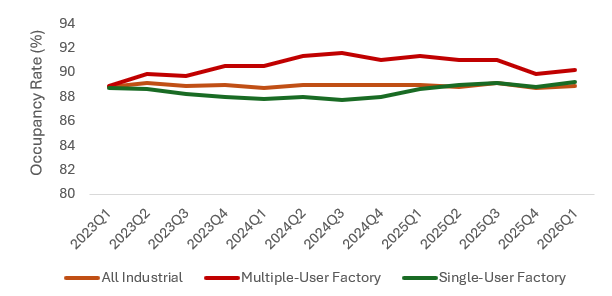
Chart 6: Total, occupied and Vacant Stock of Industrial Properties
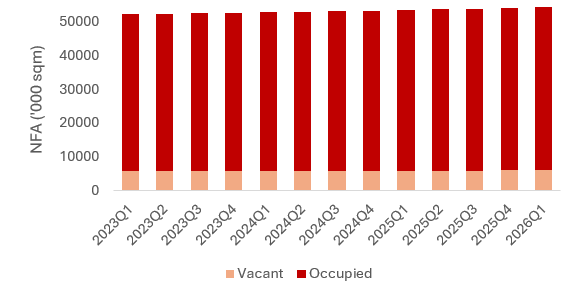
Chart 7: Total, Floor Area and Occupancy Rate of Newly Completed Private Multiple-User Factory
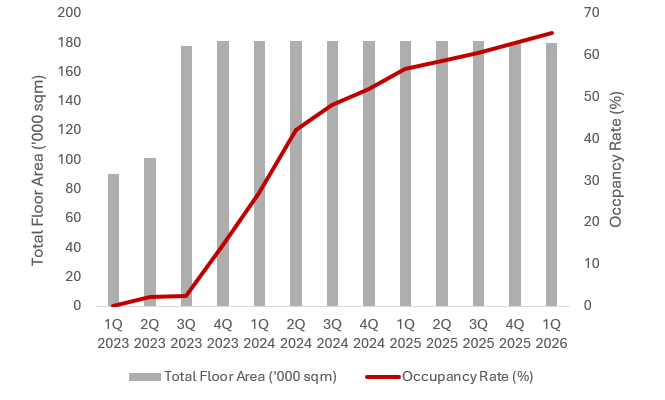
Since 3Q 2023, newly completed industrial space has increased significantly. Likewise, occupancy has risen steadily, reaching above 60% by 1Q 2026. This suggests that recently completed supply is being progressively taken up by the market. This reflects continued demand for newer industrial space, particularly among occupiers and investors looking for modern, well-located factory units.
This is evident in recent industrial launches such as CT Gold @ Macpherson, Lok Yang Connection, Tampines Connection and Stellar @ Tampines. The strong reception to these projects suggests that demand remains resilient for well-located industrial properties. Buyers and occupiers continue to favour newer developments that offer modern specifications, functional layouts and good accessibility.
Why Industrial Property Could Appeal to Investors
No ABSD For Investors
One key reason industrial property may appeal to investors is that industrial property is not subjected to Additional Buyer’s Stamp Duty (ABSD). This differs from residential property, where ABSD can significantly increase the upfront cost for Singaporean buyers who already own a residential property.
Buyers of industrial property still need to factor in other costs, including Buyer’s Stamp Duty (BSD), legal fees, financing costs, maintenance charges, property tax, and other transaction expenses. However, for investors who already own residential assets, industrial property can offer away to gain exposure to Singapore real estate without incurring ABSD.
Industrial Prices and Transaction Growth
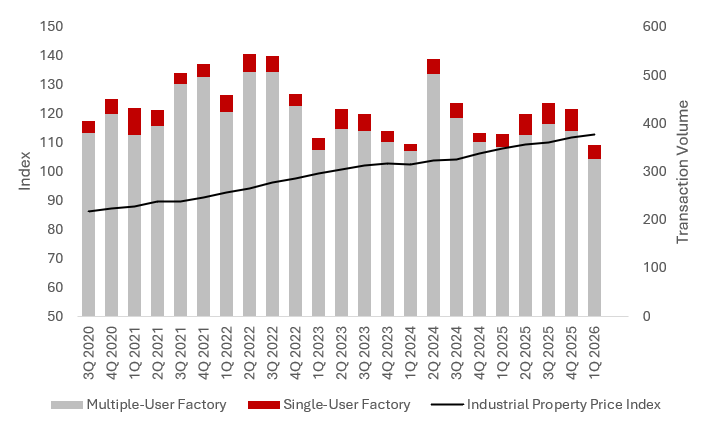
Price growth and transaction activity in the industrial market have remained stable, reflecting continued investors and owner occupiers’ interest in the sector.
Industrial prices rose steadily in 1Q 2026, supported by resilient demand, rising rents, and sustained confidence in industrial property market. Transaction volumes have also remained healthy, suggesting that buyers are still active despite broader macroeconomic uncertainty.
Chart 8: Price Index and Transaction Volume
Rental Income Growth
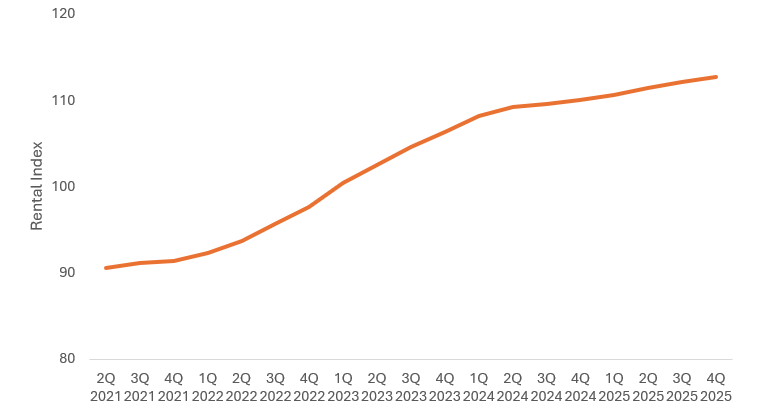
Industrial properties offer landlords a recurring rental income and a stable rental growth which could appeal to investors, particularly those focused on income generation.
Industrial rents have continued to increase, suggesting that leasing demand remains healthy. Rising rents can support more stable income returns for owners and reinforce the appeal of industrial property as an asset class for investors seeking regular cash flow.
Chart 9: Rental Index of All Industrial Properties
Upcoming Industrial Project
Gate+ is a 33-year leasehold, B2 ramp-up industrial development located within Singapore’s growing western industrial corridor. Its shorter tenure may suggest a more accessible price quantum, which could appeal to investors seeking higher rental yields.
For business owners who are currently renting, the project also offers an opportunity to own their premises, with monthly mortgage payments that may be comparable to their existing monthly rental.
Gate+ also sits near major growth nodes such as Jurong Lake District, Jurong Innovation District, and Tuas Mega Port, placing it close to manufacturers, logistics firms, engineering businesses, and other industrial occupiers.
The project is located near the upcoming Tukang and Jurong Hill MRT stations on the Jurong Region Line and is also within proximity to Boon Lay MRT Station on the East-West Line. This provides convenience for workers commuting to work.
Conclusion
Despite global uncertainty, Singapore’s economy has remained resilient, creating a supportive backdrop for industrial real estate. Manufacturing continues to play an important role in the economy, supported by production activity, export demand, and Singapore’s position as a regional hub for high value manufacturing industries.
Ultimately, industrial property remains relevant as a portfolio asset because it offers diversification, income potential, and allows Singaporean buyers to purchase another property without having to pay ABSD. However, most industrial properties tend to come with a shorter tenure than residential properties, indicating greater exposure to the risk of lease decay. Nevertheless, well-located industrial properties can still play a role for investors looking to diversify their real estate portfolio.
I confirm that I have read theprivacy policy and allow my information to be shared with this agent who may contact me later.
