
Commentary on 2Q 2026 URA Flash Estimates
- ERA Singapore
- 7 min read
- PressRelease
- 1 Jul 2026
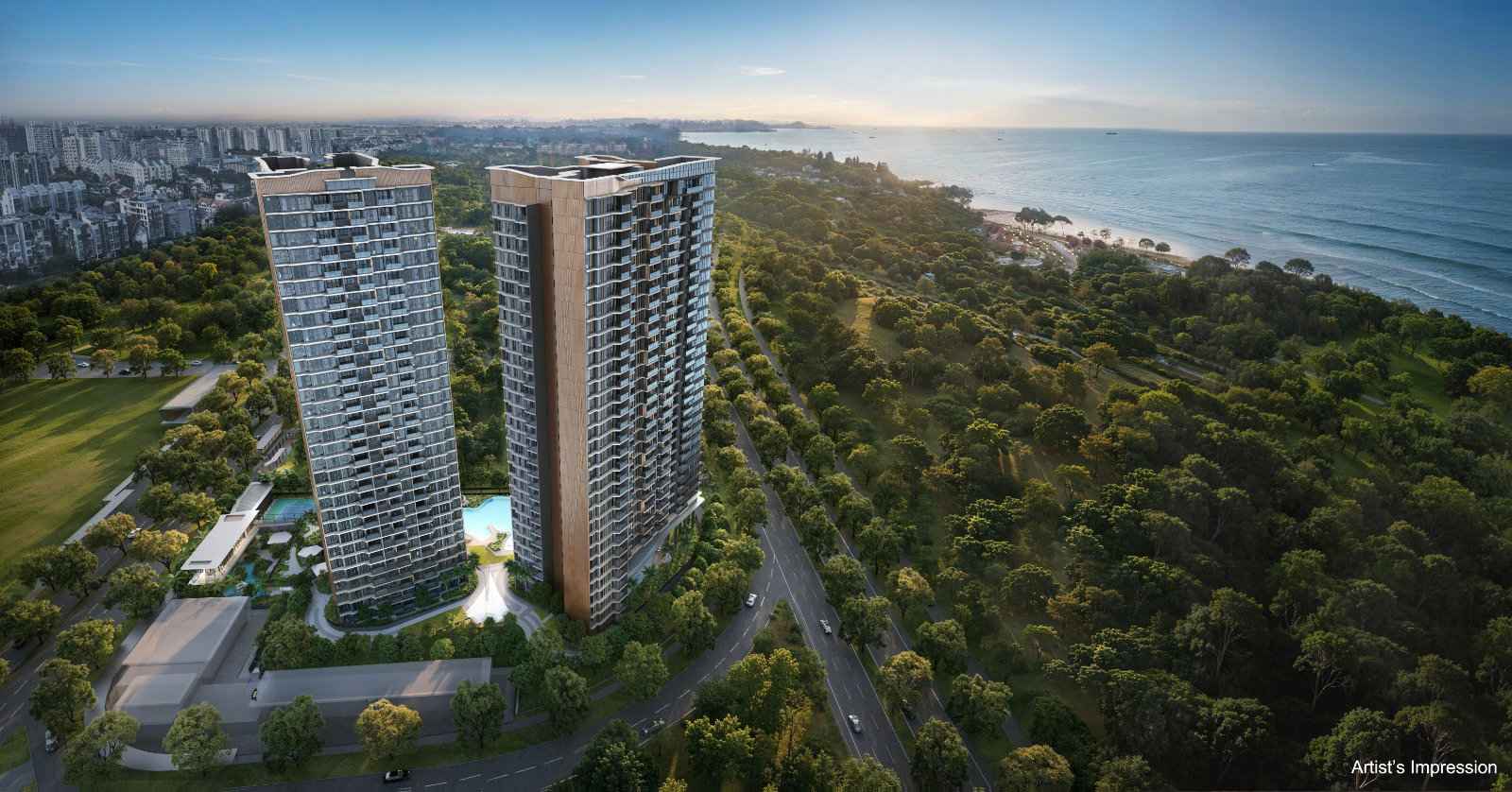
According to flash estimates released by URA for 2Q 2026, the All-Residential Property Price Index rose modestly by 0.5% quarter-on-quarter (q-o-q), indicating a slowdown from the 0.9% q-o-q growth recorded in the previous quarter.
Based on caveats lodged as at 1 July 2026, total private home transactions held relatively firm, recording 5,358 units, compared with 5,413 in 1Q 2026.
The overall non-landed private property price index (PPI) decreased slightly by -0.1% q-o-q to 210.6 in 2Q 2026, following the slight uptick of 1.3% q-o-q witnessed in the first quarter.
- The Outside Central Region (OCR) saw a -0.2% decline in prices, despite the successful launch of projects like Vela Bay and Tengah Garden Residences. This can be attributed to the high base set in the previous quarter.
- The RCR saw a corresponding -1.4% downturn in prices, with Hudson Place Residences being the sole new launch project in the quarter.
- The Core Central Region (CCR) was the only market segment which saw a positive shift, at 2.0%. Despite no new launches in the quarter, prices in the resilient CCR segment held firm, resulting in price growth despite a dip in transactions. As of 1 July 2026, the market segment saw a significant decrease in transactions, with only 596 transactions (compared to 1,223 in the previous quarter).
- Demand held steady for landed home prices, which increased by 2.6% in the quarter.
The quarter recorded only three new launches: Vela Bay (D16, OCR), Tengah Garden Residences (D24, OCR), and Hudson Place Residences (D05, RCR). This paled in comparison to 1Q 2026, which saw six project launches, including two Executive Condominium (EC) projects.
Overall, the decrease in the PPI can be attributed to the seasonal lull during the annual June school holiday period, which is a low period for home viewing and subsequent home-buying activity.
The seasonal lull also affected the resale market, contributing to a decline in transactions from 3,586 in 1Q 2026 to 3,482 in this quarter. Meanwhile, sub-sale transactions continue on their downward trend, falling to a new record low of 140 transactions this quarter.
The lower number of transactions overall in the quarter led to a corresponding moderation in the price index.
New Sale
According to caveats lodged as of 1 July 2026, new sale transactions increased by 3.5% quarter-on-quarter to 2,093 (excluding EC) units in 2Q 2026. The uptick can be attributed to an overwhelmingly positive reception of new launch projects, despite only three launches this quarter compared to six in the previous quarter.
The take-up rate reported for these new projects was impressive: 99% for Tengah Garden Residences, 72% for Vela Bay, and 61% for Hudson Place Residences on their respective launch weekends. The positive reception for these projects fuelled the slight uptick in prices for the quarter.
Hudson Place Residences recorded a 61% take-up rate at launch and appealed to buyers for its city-fringe location adjacent to the One-North precinct. Beyond supporting housing demand from these robust, rapidly growing industries, Hudson Place Residences offers a strong value proposition for buyers seeking new homes in the RCR market. The median new sale price of $2,465 psf reported at Hudson Place Residences was 6.5% lower than the 6-month RCR median of $2,643 psf, highlighting the underlying demand for affordably priced homes in the city fringe, particularly among young families that hold jobs in one of one-north’s emerging industries.
2Q 2026 saw two OCR launches in Tengah Garden Residences and Vela Bay. These homes were met with an overwhelming reception, with buyers looking to secure a first-mover advantage in these emerging precincts. We saw 99% take-up at Tengah Garden Residences and 72% at Vela Bay on launch weekend. These projects sold at median prices of $2,113 psf and $2,862 psf, respectively. The OCR continues to reflect a market segment supported by a strong upgrader pool, particularly from HDB owners unlocking significant housing equity.
Executive Condominiums
There were no EC launches in 2Q 2026, which contrasted with the fanfare for the launches of Coastal Cabana and Rivelle Tampines in the previous quarter. Therefore, we observed that EC transactions in 2Q 2026 mainly consisted of buyers snapping up remaining stock from the aforementioned projects.
In May 2026, measures were implemented by the Ministry of National Development (MND) that is expected to impact the launch pricing and performance of future EC projects. These measures included the extension of the Minimum Occupation Period (MOP), the removal of the Deferred Payment Scheme (DPS), and an increase in wait time for second-time buyers.
With the changes directly impacting future EC launches and GLS sites, EC homebuyers who may have been sitting on the fence might be prompted to act on EC projects currently on the market, which offer greater flexibility as they are still under the previous EC regulations.
Secondary Market
In 2Q 2026, resale transactions for non-landed private homes (excluding ECs) declined by 18.3% quarter-on-quarter to 2,634 units, according to caveats lodged with URA as of 1 July 2026. This is the lowest level since the second quarter of 2020 and represents a departure from the stable pattern of approximately 3,000 resale units per quarter for the previous eight quarters.
Despite a decrease in transaction volume, median resale prices for non-landed private residential properties (excluding executive condominiums) continue to rise, up 1.5% quarter-on-quarter to $1,792 psf.
The weaker sales activity in the resale market could be due to the seasonal lull during the annual June school holidays, when many potential homebuyers travel overseas, causing viewings and subsequent home-buying activity to dwindle.
Within the sub-sale segment, transaction volumes continue to decline, falling by 20% quarter-on-quarter to 140 transactions, the lowest since the peak of 411 transactions in 4Q 2023. Sub-sale transactions also accounted for only 2.2% of all sale transactions for non-landed private homes. The decline in sub-sales could be attributed to the increase in new launches, which have longer remaining tenures and more attractive pricing.
Despite the decline in transaction volume, the median sub-sale price rose from $2,323 psf in 1Q 2026 to $2,430 psf in 2Q 2026, an increase of 4.6% quarter-on-quarter.
Market Outlook
Based on the 2Q 2026 flash estimates, overall private property prices increased by 0.5%. It remains on track to reach ERA’s earlier forecast of 3% to 5%.
Due to the ongoing geopolitical tensions, stability may be further challenged by conflicts involving Israel, Iran, and the United States, heightening concerns about economic instability. So far, oil prices have risen, and financial markets have shown volatility. If supply disruptions persist, this could result in higher costs for energy, construction, and living expenses.
Singapore is recognised as a safe haven amid global uncertainties thanks to stable governance, a strong Singapore Dollar, and a resilient property market. Despite global market challenges, the residential property sector in Singapore remains predominantly optimistic for the near future. Over time, Singapore has built a reputation as a leading wealth hub in the region, with its real estate regarded as a high-quality asset that provides steady rental income and strong capital appreciation.
The country is experiencing a significant increase in wealth transfer, mainly driven by a wealthy middle class whose assets have risen rapidly due to increasing property values. With an ageing population, this transfer is expected to speed up. Although this influx of capital will benefit future generations financially, it may also widen the societal wealth gap. As tensions in the Middle East escalate, more wealth could flow into Singapore through transfers and investments.
With Singaporeans' strong belief in real estate investment, much of the expected increase in wealth transfer will likely benefit the real estate market. We already see this as older homeowners downsize to unlock housing equity for liquidity, and younger buyers receive parental support for property acquisitions. Consequently, this flow of capital will sustain long-term demand and price growth across Singapore's residential market.
In 2026, the private residential market is expected to remain resilient, supported by moderate price growth driven by strong owner-occupier demand and ongoing right-sizing trends. Healthy take-up rates from recent project launches reinforce this positive outlook. This underlying demand has also encouraged developers to commit to new projects, suggesting that the development pipeline and future housing supply will continue to be supported by strong market fundamentals.
Buyers can also look forward to a pipeline of 18 private residential projects, including one landed project, and 5 EC launches this year. Barring any unforeseen circumstances, ERA Singapore projects new home sales to be between 9,000 and 10,000 units, while the secondary market is expected to record 13,000 to 14,000 transactions, indicating stable underlying demand in the year ahead.
I confirm that I have read theprivacy policy and allow my information to be shared with this agent who may contact me later.
